Data Security MLS Guide for Cyprus Real Estate Teams
Learn how Cyprus real estate teams can protect listing data, buyer information, CRM connections, permissions, backups and MLS integrations.
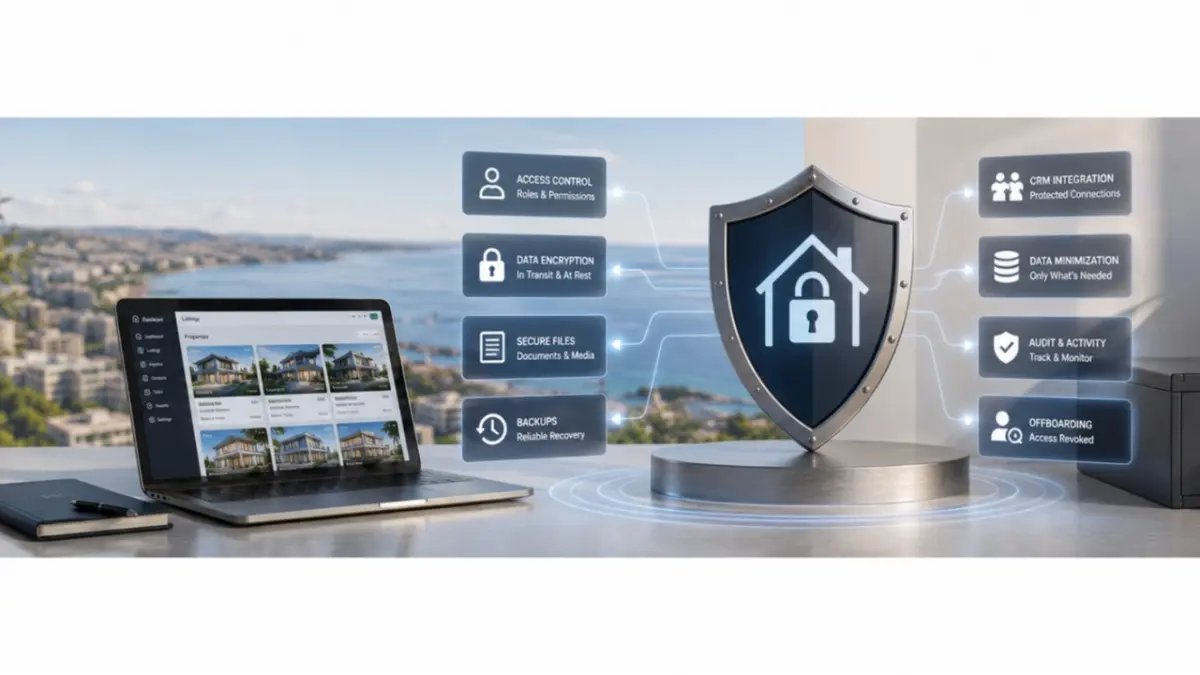
Data security begins with ordinary decisions: who can open a buyer inquiry, who can edit a listing, where project documents are shared and what happens to an agent’s access when they leave the team.
For agencies and developers in Cyprus, an MLS workflow can help keep property and client information organized. The team still needs rules for using that information. A secure platform alone cannot prevent an old file from being forwarded or a former colleague from retaining access to a separate shared folder.
Know Which Information Needs Protection
A property listing may be intended for wide distribution. The work around it often is not. Buyer contact details, seller information, viewing notes and inquiry history can contain personal data. Unpublished prices, reserved units and internal project documents may be commercially sensitive.
Teams should decide what each group needs to do its work. An external broker may need approved listing materials without needing access to every internal note. An agent handling a buyer inquiry may need the client’s requirements, while an unrelated partner does not.
Reduce Uncontrolled Copies
Chats, spreadsheets and downloaded PDFs are convenient, but copies can outlive the reason they were shared. A price list may stay on a phone after an update. A contact export may remain in a personal folder after someone changes roles.
Keeping work connected to a managed record makes it easier to establish which version is current and who should have access. It does not recall files that people have already saved. Teams should therefore decide when documents may be downloaded or forwarded and how partners will be told that earlier materials are no longer current.
Apply GDPR Principles to Daily Work
The European Commission’s GDPR guidance describes principles including data minimization, storage limitation, accuracy, and integrity and confidentiality. In practical terms, a real estate team should collect the personal information it needs for a defined purpose, restrict access and review how long it keeps the data.
Calling a product “GDPR-compliant” does not establish that an agency’s use of it complies with the law. The agency must examine its own processes, including how inquiries are collected, who can see them and how requests concerning personal data are handled.
Review Access Throughout the Working Relationship
Access is not a one-time setup. Roles change, projects end and agents leave. Agencies should review who can view buyer records, change property details, export contacts and open project documents.
Offboarding deserves a specific step in that process. Removing an account from the MLS is only part of the job if the person also had access to a CRM, shared drive, website or external integration. The European Data Protection Board’s guidance for small businesses addresses the need for technical and organizational security measures appropriate to the risk.
Check Where Integrations Send Data
An MLS may connect with a CRM, website or another business system. Before enabling a connection, the team should know which information it sends, who can use the connection and where additional copies are stored.
If a connection stops working, the team also needs to know whether listing status or buyer information can become inconsistent between systems. Access credentials and permissions should be managed deliberately, and unused connections should be removed.
Plan for Errors and Recovery
Records can be deleted or changed by mistake. Teams evaluating any platform should ask how data can be recovered, who can request that recovery and what the process covers. The same review should address how a suspected incident is reported internally and who takes responsibility for investigating it.
Encryption and backups are relevant security controls, but their mere presence does not guarantee that information is safe. Product-specific standards, backup schedules and recovery commitments should be checked in the provider’s current documentation rather than assumed.
Make Security Part of the Workflow
MLS RealtyHub can provide a structured place for property and team information. Agencies and developers should assess the access, document and integration options available for their setup, then define their own procedures for handling client and partner data.
The aim is clear responsibility: people see the information they need, updates reach the right users, old access is removed and sensitive details are handled with care. Those habits protect the client relationship as well as the records behind it.
Frequently asked questions
What information should a real estate team protect in an MLS?
Buyer and seller contact details, inquiries, viewing notes and other personal data need appropriate protection. Teams should also control access to commercially sensitive project materials and internal listing information.
Does using an MLS make an agency GDPR-compliant?
No. Software can support access controls and organized records, but the agency must assess how it collects, uses, shares and retains personal data.
What should a team check before connecting an MLS to another system?
Identify which data will move, who can authorize and use the connection, where copies will be stored, how errors will be handled and how access will be removed when the connection is no longer needed.