Developer Pricing Tools Cyprus
Learn how Cyprus developers can use MLS analytics, comparative inventory, broker feedback and dashboard data to support smarter project pricing.
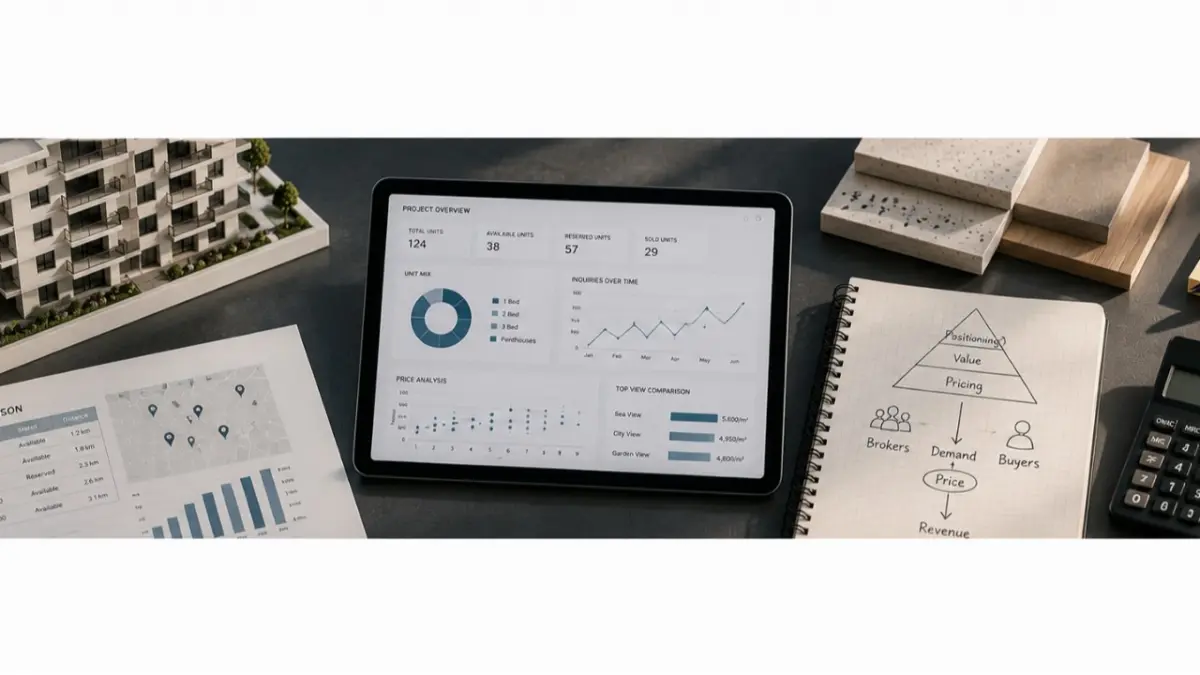
Pricing a new development is a commercial decision. Construction costs and target margins matter, but buyers also compare the project with other properties they can see. Within one building, a unit’s floor, layout, view or delivery stage may affect that comparison.
Developer pricing tools in Cyprus are most useful when they bring those factors into a repeatable review. They help the team ask why a unit is positioned at its current price and whether new information calls for a change. They do not produce an automatically “correct” price.
Start with the Project’s Market Position
Before changing a price, identify what the buyer can compare with the development. That may include competing new-build projects, suitable resale properties and other units within the same building.
Active listing prices show what sellers are asking. They do not show what buyers ultimately paid. The Department of Lands and Surveys offers comparable sales information to eligible professional users, while RICS guidance on comparable evidence explains the importance of assessing how relevant each comparison is.
A useful review records the source and date of each comparison. Nearby properties are not necessarily equivalent: size, specification, location and transaction conditions may differ.
Compare Units Individually
A flat increase or reduction across a whole project can hide important differences. A ground-floor apartment, a corner unit and an upper-floor apartment may appeal to different buyers even when their floor areas are similar.
A unit-level review can consider:
- Size and layout.
- Floor and orientation.
- View and outdoor space.
- Parking and other included features.
- Delivery stage and payment terms.
- Remaining availability in the project.
The team should be able to explain the reason for a price difference. That explanation helps sales staff and brokers present the options consistently.
Add Buyer and Broker Feedback
Inventory comparisons show how a project is positioned. Inquiries and sales conversations show how buyers are responding to that position.
If one unit receives repeated questions but few viewings, the team can review its presentation and the objections agents hear. If another receives serious interest despite a higher asking price, it may have features the initial pricing model did not fully reflect.
These signals need interpretation. A quiet listing does not prove that its price is wrong, and a busy week does not establish a new market value. Feedback gives the commercial team a reason to investigate.
Use MLS Data as Decision Support
Structured project inventory can help developers review available units alongside relevant active listings. MLS RealtyHub can support the organization of project and unit records for that work.
The pricing team still needs to check the quality and scope of the information. MLS listing data can support comparison and sales discussions; it should not be presented as a certified valuation or an automatic price recommendation. Where a formal valuation is needed, the developer should obtain one from an appropriately qualified professional.
Set Clear Review Points
Pricing does not need to change every time an agent reports an objection. A scheduled review gives sales, marketing and finance teams a chance to examine the same evidence together.
Useful review points include a new project phase, a significant change in remaining stock, repeated feedback about a particular unit type or a change in the properties buyers are comparing with the development. Record the evidence considered, the decision made and who approved it. Then make sure agents receive the current prices and terms.
Apply the Framework to the Project
A Limassol apartment project may need close comparison between units with different views and nearby active stock. A Paphos development may review whether its available layouts match the buyers currently making inquiries. In Larnaca, a new phase gives the team an opportunity to reassess remaining units alongside the next release.
The questions change by project, but the discipline remains the same: compare relevant properties, examine unit-level differences, listen to buyer feedback and document the decision. Pricing tools make that discussion clearer. The developer’s team remains responsible for the final commercial price.
Frequently asked questions
What are developer pricing tools?
They are data and workflow tools that help a developer compare units, competing properties, availability and buyer response before setting or reviewing prices.
Do MLS comparisons replace a professional valuation?
No. MLS data can support a commercial pricing discussion. A formal valuation requires the appropriate professional work and evidence.
When should a developer review unit prices?
A review is useful when a new phase launches, remaining availability changes, similar properties enter the market or repeated buyer feedback raises a clear pricing question.