Email Marketing Developers Cyprus — How to Connect Campaigns With Current Project Data
Learn how Cyprus developers can segment buyers and agents, automate follow-up and keep every project email aligned with current prices and availability.
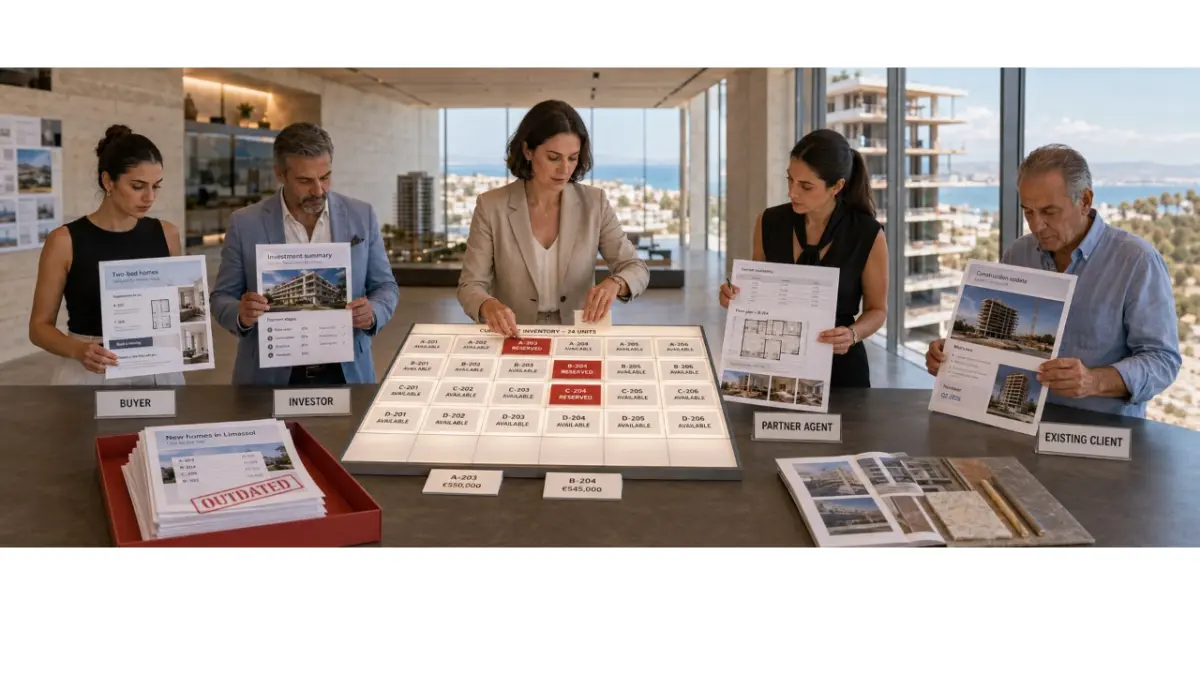
A developer launches a 24-unit project in Limassol and sends one email to the entire contact database. Buyers, investors and partner agents receive the same message, even though they need different information. A week later, several units are reserved and two prices change, but the original email continues circulating with the old details. The campaign was delivered, yet it created more follow-up work instead of supporting sales. Effective email marketing developers cyprus requires messages that match the recipient, the sales stage and the current state of the project.
Why Email Campaigns Fail Before the Copy Is Written
The problem often begins with the data behind the email. When prices, availability, floor plans and contact activity are stored in separate spreadsheets, folders and systems, the marketing team cannot reliably determine what to send or to whom.
Developers also communicate with different audiences. Buyers want suitable units, prices and viewing options. Investors may focus on the project stage, payment terms and the assumptions behind a potential return. Partner agents need current inventory, floor plans and approved materials they can present to clients. Existing leads need follow-up connected to their previous enquiry.
A general announcement may still be useful at launch, but it cannot serve every later need. The newsletter developers send to buyers should differ from an inventory update prepared for partner agencies.
How Segmentation Changes the Campaign
Useful segmentation begins with the recipient’s role. It can then reflect preferred region, budget, property type, language and stage in the sales process.
The same project update can become several focused messages:
- Prospective buyers: available units that match their preferences, with a clear next step for asking a question or arranging a viewing.
- Investors: relevant project details, payment terms and information needed to evaluate the opportunity without promising a return.
- Partner agents: current inventory, approved prices, floor plans and a clear contact for buyer enquiries.
- Existing leads: an update related to the unit or property type they previously asked about.
A Cyprus development may need communication in English, Greek or Russian, depending on its audience. Translation does not replace segmentation: a message still needs to address the recipient’s interests.
Frequency should follow a reason to contact someone. An approved price change, newly available unit or construction milestone may warrant an update to the relevant group. A general newsletter can follow a regular schedule without sending every project change to every contact.
Connecting Email, CRM and Project Inventory
An email platform manages campaigns and delivery. A CRM records contacts, lead stages and follow-up. An MLS or central project system holds structured information about projects, units, prices and availability.
Problems arise when these records diverge. The CRM may show that a buyer wants a two-bedroom apartment in Limassol but not which units remain available. A campaign template may still carry an old price. The project record may be current while the sales team continues copying details manually into emails.
A workflow combining CRM emails MLS, MLS data and project triggers can connect those tasks:
- Maintain approved prices and availability in an authoritative project record.
- Use the CRM to identify the recipient’s interests and sales stage.
- Decide which project event calls for a message or personal follow-up.
- Check that the email uses current, approved information before sending.
- Record replies, enquiries and viewing requests in the sales workflow.
The CRM can manage contacts, the project system can maintain inventory, and the email service can handle campaigns. Personal messages remain useful for negotiations, complex questions and contacts who expect individual attention.
A Campaign for a 24-Unit Limassol Project
Consider a developer launching an off-plan project with 24 units. The contact base includes local buyers, international buyers, investors and partner agents. Rather than send one universal newsletter, the team prepares messages for each group.
The sequence could include:
- A launch announcement introducing the project to contacts who have agreed to receive relevant updates.
- A buyer email showing suitable unit types and an option to request current availability.
- A separate partner update with approved project materials and a way to check live unit information.
- Personal follow-up after an enquiry or viewing.
- Targeted updates when an approved price, unit status or construction milestone changes.
The partner email could state the project’s location and stage, identify where to access approved plans and materials, direct agents to current prices and availability, and provide a contact for buyer introductions. Any price list attached to the message should be dated so agents can recognise when it needs replacing.
If three units are reserved after launch, the team updates the authoritative inventory first. Future emails can then use the new status. The original email already in someone’s inbox cannot be changed, so it should direct recipients to confirm current availability before relying on earlier details.
Consent, Deliverability and Useful Measurement
Email campaigns in Cyprus need a lawful basis for using contact details and must comply with applicable privacy and electronic-marketing rules. The developer should record how a contact entered the database, what communication they agreed to receive and any request to stop. Unsubscribe and suppression records must continue to apply when lists are imported or systems are changed.
Purchased databases and old contact lists deserve particular care because the developer may not be able to establish how those people agreed to receive marketing. Requirements can differ according to the relationship with the recipient and the type of message. The team should review its actual sending practices with a qualified privacy adviser.
Open rate alone is a weak measure of campaign results. Delivery and bounce rates, clicks, replies, enquiries, viewing requests and qualified leads show more about whether a message reached the right people and supported a useful next step.
When Automation Is Worth Using
Automation can help when a developer manages several projects, frequent inventory changes or many contacts at different sales stages. It can reduce repetitive work if the underlying records are accurate and the triggers are carefully defined.
A smaller team may get better results from targeted personal emails. Automation cannot fix an irrelevant contact list, inaccurate prices or weak project information.
MLS RealtyHub can support the project data used in this workflow. Developer CRM Integration and Developer API Integration can connect project information with other systems where those connections are configured. Developer Dashboard can help the team oversee projects and inventory.
MLS RealtyHub does not guarantee that an email will produce a transaction. Its role is to help the developer work from structured project information so that buyers and partners receive fewer conflicting versions of the same offer. That is the operational value behind email marketing developers cyprus.
Frequently asked questions
How Do Developers Use Email Marketing?
Developers use email for launches, relevant availability and price updates, construction milestones, viewing follow-up and communication with partner agents. Each message should have a defined audience and purpose.
What Should a Real Estate Newsletter Include?
It should have a clear subject, relevant project information, a useful next step, sender details and an unsubscribe option. Prices and availability should be checked before sending.
How Often Should Developers Send Newsletters?
There is no universal schedule. Send general updates at a frequency that suits the audience, and contact relevant groups when an approved project change gives them a useful reason to hear from you.