How to Choose Property in Cyprus for Living or Holidays
Learn how to compare areas and properties in Cyprus, check ownership costs and documents, and prepare for viewings before making a decision.
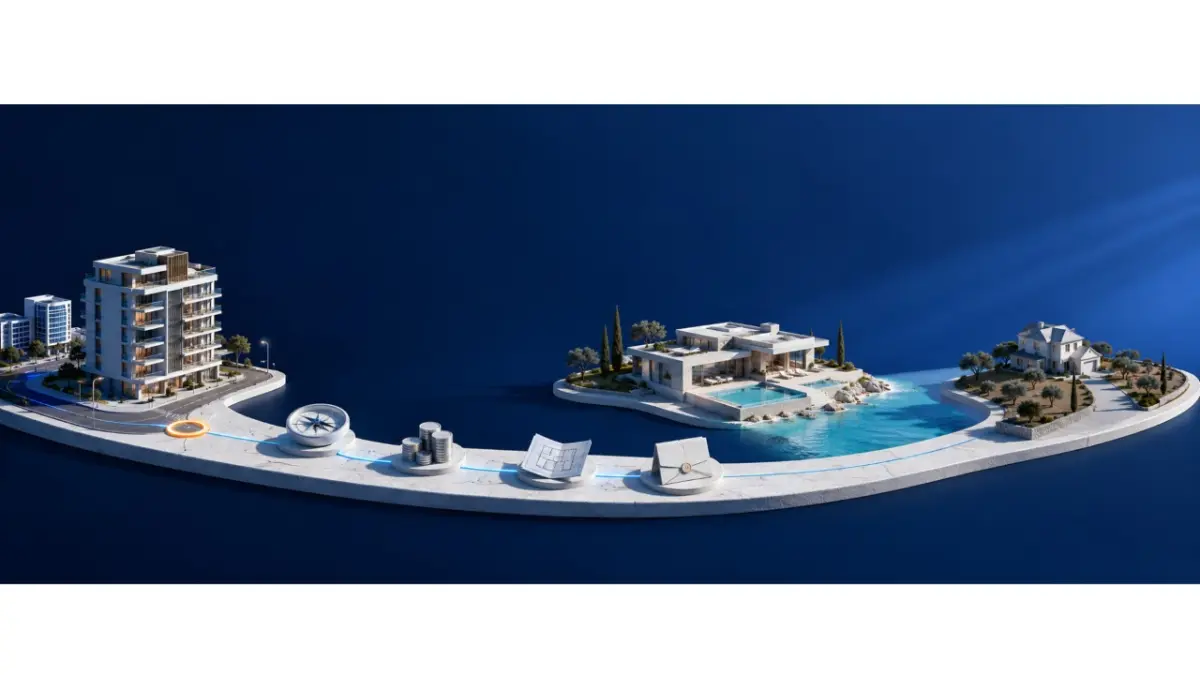
The right luxury property Cyprus has to offer should suit the buyer’s lifestyle as well as their budget. A city apartment, a seafront villa and a house in a quiet suburb may cost a similar amount while providing very different living conditions. A clear process helps buyers compare locations, set practical requirements and verify each property before arranging a viewing.
Who This Guide Is For
This guide is for international buyers and expats considering an apartment, villa, townhouse or one of the many Cyprus vacation homes available across the island. It covers both permanent living and properties used for shorter stays during the year.
What to Prepare Before You Start
Begin by defining how the property will be used. Permanent residents may prioritise shops, schools, healthcare, transport and year-round services. Holiday-home buyers may care more about airport access, proximity to the coast, local seasonality and property management while they are away.
Your budget should include more than the advertised price. Taxes, legal and transaction costs, insurance, repairs and ongoing maintenance can all affect the total. Separate essential requirements from preferences so that a suitable property is not excluded because of a minor feature.
Step 1. Choose Areas That Fit Your Plans
When comparing Cyprus homes for sale, narrow the location to two or three areas before looking at individual properties. A central apartment, a coastal house and a remote villa serve different purposes even when they fall within the same price range.
Limassol
Buyers who want city services, employment opportunities and access to the coast may find Limassol suitable. Consider traffic, noise, building density, access to daily services and the actual walking route to the beach. Living conditions can vary significantly between nearby neighbourhoods.
Paphos
Paphos and its surrounding communities offer detached homes and quieter residential settings alongside apartments and townhouses. Some properties provide privacy but sit far from shops, healthcare and public transport. Check daily routes and decide whether regular car use will be practical.
Larnaca
Airport access makes Larnaca convenient for frequent travel and part-time living. Central neighbourhoods may provide easier access to everyday services, while suburban locations may offer more space with longer journeys.
Nicosia
The capital is worth considering when access to the sea is not essential. Distance to workplaces, schools, healthcare and main transport routes will usually matter more than coastal features.
Ayia Napa, Protaras and Paralimni
The eastern coast may suit beach-focused and seasonal living. Before buying, check which shops, restaurants, transport services and property-management options remain available outside the main tourist season.
Polis and Latchi
Lower-density development and a quieter setting may appeal to buyers who do not need to live close to a large city. Consider travel times to airports, hospitals and everyday services.
Step 2. Set the Main Property Requirements
Once the areas are clear, specify the property type, budget, number of bedrooms and condition. Add practical requirements such as the floor, lift, parking, storage, plot, pool and distance to essential services. Check whether the stated size refers to internal, covered or total area.
Decide whether you are willing to consider a completed home, a resale property or an off-plan development. An off-plan purchase calls for checks on the developer, permits, delivery terms, specifications and payment schedule. A completed property should be assessed for its condition, renovation history and consistency between the actual layout and approved plans.
Step 3. Verify the Position Relative to the Sea
The seafront properties Cyprus has to offer may sit directly beside the beach, across a road from the coast or some distance from the water. A sea view does not confirm easy access to the shoreline. Check the description against the exact location.
Clarify:
- Whether the property is beside the water, on the first line of development or simply has a sea view.
- Which rooms or outdoor areas have the advertised view.
- Whether a road, another building or restricted land separates it from the coast.
- How to reach the beach on foot and whether that route is publicly accessible.
Before arranging a viewing, request the exact location, floor number, window orientation and photographs taken from inside the property.
Step 4. Compare Properties Using the Same Criteria
Even the most carefully selected premium listings Cyprus has to offer need to be compared using the same information. Record the internal area, plot size, terraces, floor, construction year, condition, parking, storage and distance to daily services for every shortlisted property.
Compare the full cost as well:
- Advertised price and what is included in the sale.
- Applicable taxes and transaction costs.
- Communal or management charges.
- Expected repairs and maintenance.
- Costs of a pool, garden or other private facilities.
With the high end property Cyprus has to offer, a higher price may reflect location, space, views, construction quality or additional services. Identify which features you will use and which would only increase purchase and ownership costs.
Step 5. Confirm That the Information Is Current
Cyprus property listings may appear on several platforms with different prices, measurements or included features. Before arranging a viewing, ask for confirmation of the price and availability, then compare the address, floor plan, photographs and description.
Missing measurements, unclear tax treatment, conflicting details, mismatched photographs, uncertain title status and undisclosed communal charges all require clarification. An inconsistency does not automatically mean there is a serious problem, but it should be resolved before money is paid.
Step 6. Request the Main Documents
Photographs and descriptions do not confirm a property’s legal position. Ask for information about the title deed and ownership, cadastral details, relevant plans and permits, and a written inventory of what the sale includes.
For a managed development, check communal charges, management rules and restrictions affecting the property. Purchase requirements may vary with the buyer’s nationality and the transaction. An independent lawyer should review the applicable permissions, taxes, documents and contract terms before the buyer commits.
Step 7. Inspect the Property and Its Surroundings
Photographs in beachfront Cyprus listings cannot fully show road noise, building density, access conditions or the actual route to the beach. If possible, visit the area at different times and check which services operate throughout the year.
Inside the property, inspect windows, air conditioning, plumbing, electrical systems, finishes and built-in equipment. For a villa, examine the pool, garden, drainage and external structures, as these can affect future maintenance costs.
A Practical Comparison
A buyer is choosing between an apartment in Limassol and a villa near Paphos. The apartment is close to shops and business areas, requires less direct maintenance and suits permanent living. However, it offers less internal space, includes regular management charges and is separated from the beach by a busy road.
The villa provides more space, a private pool and a quieter setting, but everyday life without a car would be difficult. Pool, garden and building maintenance would also increase annual costs. The better choice depends on how often the buyer will be in Cyprus, how they prefer to live and whether they are prepared to maintain a detached property.
Common Mistakes
- Choosing a property from photographs without checking its measurements and floor plan.
- Treating beachfront, seafront and sea view as interchangeable descriptions.
- Comparing advertised prices without including taxes, legal costs, repairs and maintenance.
- Ignoring how the area changes outside the main tourist season.
- Delaying document review until after paying a reservation deposit.
- Failing to confirm what furniture, equipment and other items are included.
- Comparing properties intended for completely different uses.
Checklist Before a Viewing
Before visiting a property, confirm:
- The exact location and the route to places important to you.
- The current asking price and whether the property remains available.
- The floor plan, measured areas and orientation.
- What is included in the advertised price.
- Any known communal charges or substantial maintenance needs.
- Which documents are available for independent review.
- Whether the claimed sea view or beach access matches your expectations.
If the premises will be used for a company, shop or service business, the commercial property Cyprus has to offer should be assessed separately. Intended use, access, visibility, transport connections and operating requirements will matter more than the criteria used for a residential home.
Frequently asked questions
Where Is the Best Place to Buy Property in Cyprus?
The best location depends on how you will use the property. Compare daily services, travel times, budget and the exact neighbourhood rather than choosing by district name alone.
What Is the Difference Between Beachfront and Sea View?
Beachfront generally describes a property beside the beach or on the first line, although its exact position and access still need checking. Sea view means the water is visible from part of the property; it does not establish proximity or access.
Can Foreigners Buy Property in Cyprus?
Yes, but requirements depend on nationality and the transaction. Buyers from outside the EU may need permission to acquire the property. Confirm the procedure for the specific purchase with an independent lawyer.