MLS Collaboration Tool for Real Estate Agencies in Cyprus
Scattered files slow real estate teams down. Learn how an MLS collaboration tool helps agencies control listings, leads, roles, and buyer follow-up.
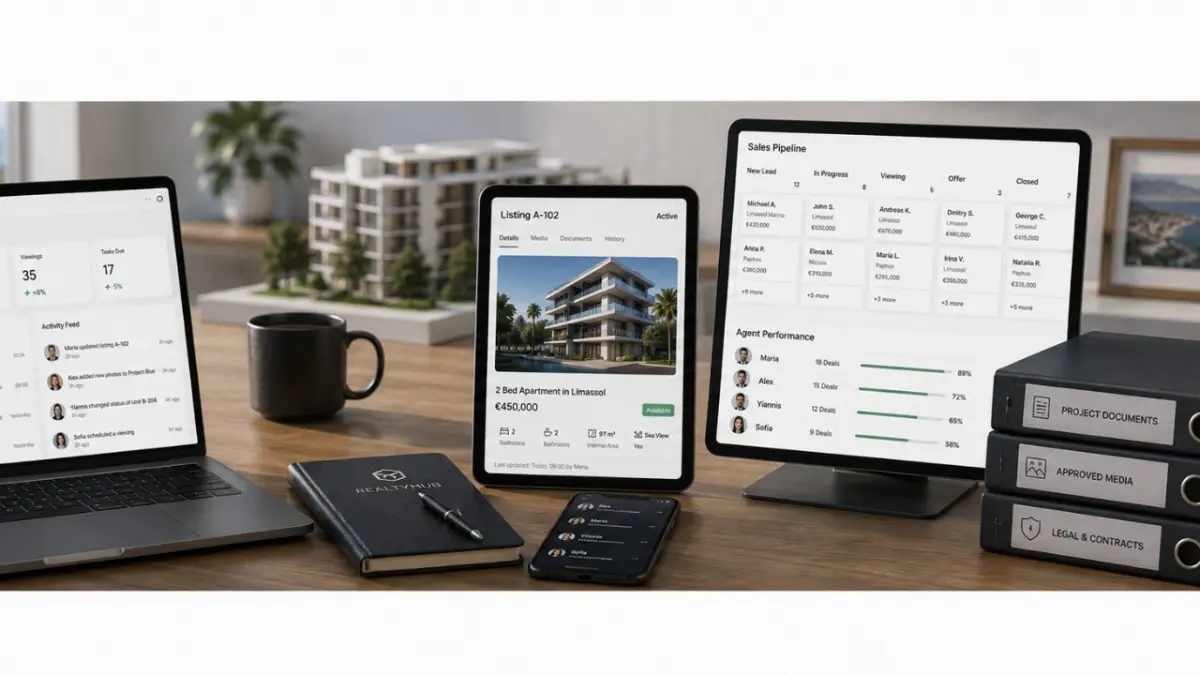
As an agency grows, listings become part of its daily operations. Properties arrive from owners, developers and partners, while inquiries come through websites, portals and direct messages. The information may end up across CRM records, spreadsheets, PDFs, chats and agents’ personal notes.
An MLS collaboration tool helps the team work with property records, access and responsibilities in a more structured way. Its practical value appears when an agent needs to answer a buyer, a colleague takes over a lead or a manager needs to know which version of a listing the team is using.
The Role of a Team-Based MLS
A team-based MLS connects property information with the people who work on it. Agents need current listing details. Managers need to know who is responsible for updates and follow-up. Developers and partners need a clear way to share approved project information.
MLS RealtyHub provides a technology framework for organizing that work. The agency and its licensed professionals remain responsible for their client relationships, property checks and transactions.
Keep One Working Property Record
The same property can appear in a spreadsheet, a portal draft, a CRM note and a brochure. If its price or status changes, those copies can begin to disagree.
A shared listing MLS gives the team a working record to update and consult. Property details, status and available materials can stay closer together, according to the access and setup the team uses. Agents should still check time-sensitive information before making a commitment to a buyer, especially when availability is changing.
The benefit is that colleagues know where to begin. They do not have to decide which of several saved PDFs is most likely to be current.
Make Shared Sales Work Clear
Several people may contribute to one opportunity. An agent receives the inquiry, a colleague knows the development, a partner introduces the buyer and a manager helps resolve a question. If those contributions live only in private messages, responsibility becomes unclear.
A shared workflow should answer straightforward questions: Who owns the buyer conversation? Which property is being discussed? What has already happened? Who will take the next step?
A co-listing tool can help organize participation around a property. Commission arrangements, where relevant, still depend on the parties’ agreements and agency rules; a software record does not establish those terms by itself.
Give Managers Useful Visibility
A manager needs more than a count of listings. They need to see which records require an update, whether inquiries have an owner and where follow-up is waiting.
Reporting can help with that review when the underlying activity is recorded consistently. A dashboard should answer a management question, such as “Which buyer requests have no next action?” or “Which listings need their status checked?” The exact views available depend on the platform configuration.
Visibility works best when it supports the team’s decisions. A chart cannot resolve unclear lead ownership or correct an outdated property record on its own.
Fit the MLS Alongside Existing Tools
A CRM manages contacts and communication. A portal presents properties to the public. A chat helps colleagues exchange quick messages. An MLS workflow supports the property information and shared access that those activities rely on.
An agency does not have to abandon its other tools to improve collaboration. It does need to decide where listing details are maintained, who can change them and how agents confirm that they are using the current version.
Before setting up a shared workflow, the agency should ask its team to walk through a real inquiry. Can the assigned agent find the property, confirm its status, see the relevant materials and record the next action? That test reveals more than a long feature list.
Build the Process Around the Team
An MLS collaboration tool is useful when people know how to use it together. Give each listing an owner, agree on how status changes are recorded and make lead responsibility visible. Review access when external brokers or developers are involved.
The system will not sell a property or verify every claim for the agent. It can give the team a clearer place to work from, so less of the buyer conversation is spent searching for files and reconstructing what colleagues already know.
Frequently asked questions
What is an MLS collaboration tool?
It is a shared workflow for working with property records, access, updates and team responsibilities. It helps colleagues use the same listing information during daily sales work.
How is an MLS workflow different from a CRM?
A CRM focuses on contacts, conversations and follow-up. An MLS workflow focuses on property information and how that inventory is maintained and shared. Agencies may use both in the same sales process.
Can an MLS guarantee that a property is available?
No. A shared record can make updates easier for a team to manage, but the responsible party must keep it current. Agents should confirm availability before making a commitment to a buyer.