The Classifieds Monopoly: How Portal Dependence Can Cost Developers Control of the Buyer Journey
See where portal dependence limits buyer data and learn how to connect paid reach, live inventory and CRM follow-up in one developer-led journey.
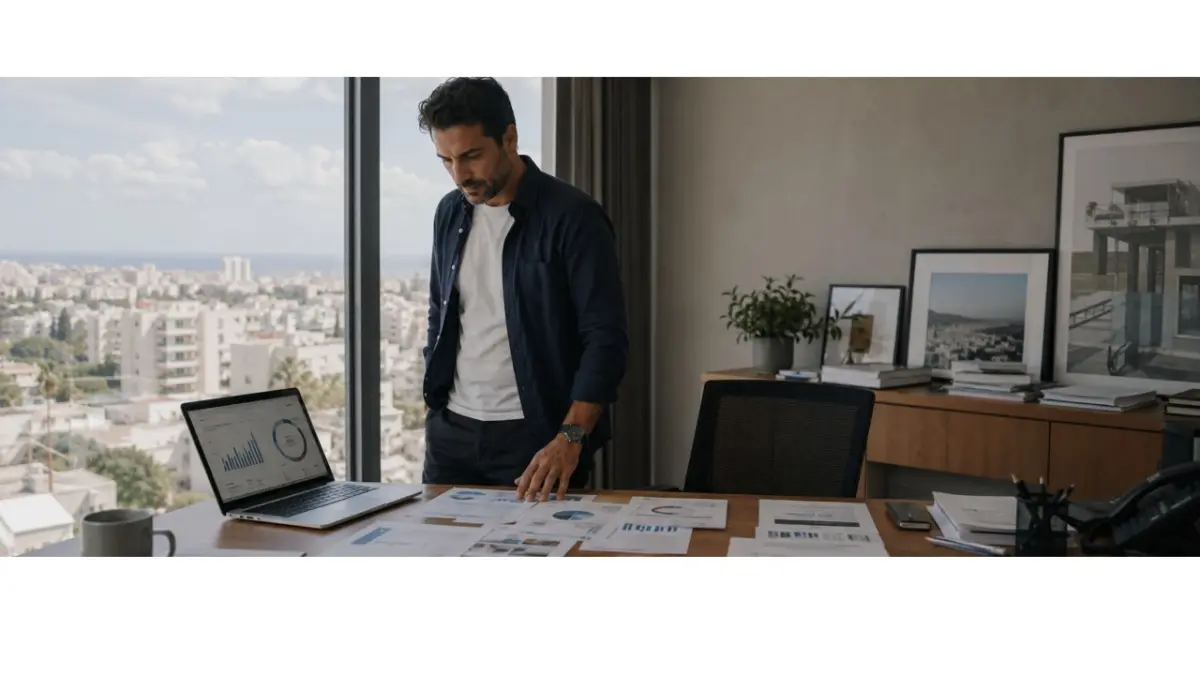
Chapter 1. The Report That Was Missing the Buyer
Andreas was the commercial director of a property development company in Cyprus. His role covered more than sales targets: he was responsible for how projects reached the market, how agents accessed information, how advertising channels performed and how enquiries moved into the sales process. That was why the monthly reports on his desk had to show more than lead volume — they had to connect spending, buyer interest and actual sales conversations.
For several years, the company had relied heavily on property portals. They gave new projects reach, introduced them to a broad audience and made it easier for buyers to discover available properties. Over time, however, the team had started treating visibility as the main sign of success: if views and clicks went up, the campaign was considered to be working.
This month, two charts were open on the meeting-room screen. The first showed that listing views had risen sharply over the previous three months. The second tracked enquiries that the sales team could confidently connect to a specific project, unit and campaign — and that line had barely moved.
The Report That Was Missing the Buyer
“Visibility is up 28%,” said the head of marketing as he moved to the next slide. “We increased exposure for two projects, so we’re seeing more views, clicks and contact requests. On paper, the campaign looks solid.”
“And what do we actually know about the people behind those numbers?” Andreas asked. “Which layouts did they compare? Which units did they return to? Was it the price, location, floor plan or a particular apartment that pushed them to enquire?”
The room went quiet. The team could show views, clicks and completed forms, but it could not reconstruct the buyer’s full decision-making process. Once someone entered the general enquiry flow, most of that person’s previous activity disappeared, leaving the sales team with little more than a name, a phone number and a short message.
Where Paid Reach Came to an End
To move the conversation away from charts and into the real buyer journey, Andreas asked the team to open one recent enquiry. The buyer had found the project on a portal, viewed the images, read the description and clicked the contact button. The sales manager received the person’s details, but could not see which units they had compared or which floor plan they had opened immediately before submitting the form.
“So we know where they found us, but we don’t really know how they were choosing,” Andreas said. “And if they decide to continue on our website, what happens next?”
The company website had a polished project page with renders, location details, key features and a general contact form. What it did not have was a current list of available units. A buyer could read about the development, but could not check availability, compare layouts or enquire about a particular apartment without asking the sales team to start the search all over again.
A Useful Channel and Portal Dependence Are Not the Same Thing
No one in the room was suggesting that the company should walk away from portals. They did their job well: they gathered demand, supported early-stage discovery and gave projects access to a large audience. The real question was how much of the buyer journey the developer had handed over to an external platform.
Dependence began when the portal stopped being one discovery channel and became almost the entire buying environment. The developer still controlled construction, pricing, availability and the advertising budget, but the buyer’s next step was shaped by someone else’s interface. A large share of what the company could learn directly about buyer interest — what buyers viewed, compared and returned to — stayed outside its own systems.
Each new campaign therefore began with another purchase of visibility. Previous campaigns generated contacts, but did little to improve the company’s website, data or follow-up process. Paid reach kept growing while the developer’s own buyer infrastructure moved forward at a much slower pace.
Four Questions for the Company’s Own System
Andreas walked over to the whiteboard and wrote down four questions. Where can buyers see current inventory? Who controls their next step after the first view? What demand data stays with the developer? Can the sales team connect an enquiry to its channel, project and specific point of interest?
The answers made one thing clear: this was not simply a question of increasing or reducing the portal budget. The company needed a more connected distribution model in which external channels generated reach without owning the entire route that followed. Once interest had been created, buyers needed a clear way to continue within the developer’s own infrastructure.
Portals could remain a discovery channel, while agents could introduce suitable projects to qualified buyers. MLS RealtyHub could maintain a single source of current inventory, the developer’s website could display available units, and each enquiry could enter the CRM with its source and context attached. External reach would still play a major role, but it would feed into a system the company could manage.
When More Noise Does Not Mean Better Listening
After the meeting, Andreas looked at the two charts again. The gap between them now made sense: the team had strengthened the beginning of the journey without improving what happened next. More people were seeing the projects, but the company was not necessarily learning more about how those people made decisions.
The issue extended beyond a single report. A developer can speak louder to the market without becoming any better at hearing what the market is saying in return. Control starts when the company can see where a buyer goes next, retain useful data from its own channels and continue the conversation at the right moment.
That afternoon, Andreas sent the team a short note: “Keep the reach. Fix the route.” It was not yet a complete strategy, but it gave them a clear place to start.
Chapter 2. One Test Enquiry
The following morning, Andreas decided to experience the process for himself. He opened the portal as if he were a buyer searching for an apartment in Cyprus, selected a location, entered a budget and added his preferred size. One of the company’s developments appeared alongside projects from several competing developers.
The listing did exactly what it was supposed to do. The images caught his attention, the key details were easy to scan and the contact form was clearly visible. If the portal were judged only on its ability to place a project in front of potential buyers, there would be little to question.
The catch appeared once an interested buyer tried to move forward. That was the part of the route Andreas wanted to examine properly.
One Test Enquiry
He opened several layouts, returned twice to one apartment and submitted a test enquiry. A few minutes later, a new contact appeared in the CRM with the portal named as the source. The record contained no browsing history, selected unit or indication of why the buyer had focused on that particular project.
“What will the sales manager see before making the call?” Andreas asked the head of sales. “Will they know that this buyer compared two apartments and came back to the same floor plan?”
“No. They’ll see the contact details and the general message,” came the reply. “Everything else has to be uncovered during the call. If the buyer has contacted several developers at once, the manager is starting from scratch.”
That was the difference between receiving a lead and controlling what happened to it. The contact had reached the company, but much of the buyer’s context had been stripped away along the route. Marketing recorded a conversion, sales received another task, and neither team could see the full story behind the enquiry.
Five Levels of Control
Instead of relying on the standard channel report, Andreas created a broader framework. The first level was reach: who the channel could attract and how often the project appeared in front of a relevant audience. The second was route: where buyers went after the initial contact and whether they could continue their search within the developer’s own environment.
The third level was data — information about viewed projects, preferred features and repeat interest. The fourth was attribution: the ability to connect an enquiry not only to a portal, but also to a campaign, project or individual unit. The fifth was follow-up: who received the enquiry, how much context reached the sales team and how quickly a useful conversation could begin.
“So high reach only tells us that people saw the project,” the marketing lead said after studying the list. “It doesn’t tell us what happened to their interest afterwards.”
“Exactly,” Andreas replied. “Visibility becomes part of the sales process only when it has a route we can manage. Otherwise, we’re measuring the entrance and guessing what happened in the rest of the building.”
Giving the Old Numbers New Meaning
In the new model, portals still played a valuable role in discovery. The difference was that an interested buyer would be able to move from that first view to current inventory, inspect available units and submit an enquiry with clear context. External reach would connect with the developer’s website, MLS RealtyHub and the company’s CRM instead of ending as an isolated contact form.
The familiar metrics did not become irrelevant overnight. Views, clicks and enquiries still showed how much attention a channel created, but they were now assessed alongside route, data, attribution and follow-up. This gave the team a way to measure the volume of attention and the quality of the journey built around it.
Before closing the test, Andreas placed the portal listing and the CRM record side by side. One screen showed how easy it was to generate a contact. The other showed why getting the contact was only half the job.
The next step was clear. If the company wanted buyers to continue the journey on its own website, the site would need to offer something more useful than another project description and another general enquiry form.
Chapter 3. The Website Needed a Useful Next Step
The company website became the next part of the route to examine. Andreas opened the page of a development that was being promoted through both portals and agents. Buyers could explore the architecture, read about the location and submit a general enquiry, but they could not see which apartments were available at that moment.
The unit list lived elsewhere. The team updated it in an internal system, sales managers checked availability before speaking to buyers, and new materials were periodically prepared for agents. The website, meanwhile, continued to present the project as a static showcase even when the prices or statuses of individual apartments had changed.
“If buyers reach our website after viewing a listing, why are we asking them to send another general request?” Andreas asked during a meeting with the technical team. “They already know the project. At this point, they need a useful next step.”
What the Website Actually Needed
The obvious answer was to add a list of apartments to the project page. But simply copying the inventory would create yet another list for the team to maintain manually. Every change in price, status or unit details could produce a mismatch between the internal system, the website and the materials used by partners.
“We can add an availability section,” the developer said. “But first we need to decide where the data comes from. If the team still edits several separate lists, someone will always have to check which version is current.”
Andreas wanted a single process in which a change was entered once and then reflected across the website and other connected channels. Buyers, sales managers and partners needed to work with the same inventory rather than their own slightly different copies.
How an IDX Feed Works
The first option the team considered was an IDX feed. It allows a property catalogue to appear on the developer’s website while drawing its information from a central source. The team does not have to move every unit across manually or keep checking several versions of the same inventory.
Prices, statuses and property details are maintained in MLS RealtyHub. The configured feed provides this information to a catalogue on the website, where buyers can browse a project, apply filters and view available units. When the status of an apartment changes, the update moves through the feed and is reflected in the catalogue.
For the company, this route could support a quicker launch. If the standard catalogue matched what the website needed, there would be no reason to build the entire data and display layer from the ground up. Buyers would see current options, while the team would continue managing inventory from one central source.
When an API Is the Better Fit
The developer’s website already had its own established design system, so the technical team also proposed an API. This approach would still deliver information from MLS RealtyHub, but it would give the developers more control over how the data appeared and behaved. They could build custom filters, unit cards, floor-plan pages and enquiry flows inside the existing interface.
“So IDX gives us a faster route to a ready-made catalogue, while an API lets us build the experience around our own website?” Andreas asked. “Either way, the availability data still comes from the same place?”
“That’s right,” the developer confirmed. “The implementation changes, but the principle stays the same. The website doesn’t maintain a separate manual copy of the inventory; it receives current data from MLS RealtyHub.”
The choice between IDX and API depended on the website’s existing structure, the filters buyers needed, available development resources and the required level of customisation. Both routes addressed the same practical goal: connecting the developer’s website to current inventory.
From a Unit Page to a Useful Enquiry
On the first test layout, a new enquiry button appeared next to each available apartment. A buyer could view the price and floor plan, select a specific unit and submit a request linked directly to it. Instead of receiving a vague question about the project, the sales manager would have a clear starting point for the conversation.
The workflow became cleaner. The team updated inventory in MLS RealtyHub, the configured connection passed current information to the website, the buyer explored available options, and the enquiry entered the CRM with its source, project and selected unit attached. Each system still had its own role, but the information no longer broke into disconnected versions along the way.
Andreas placed the portal listing next to the new website prototype. The portal helped buyers discover the development, while the website allowed them to continue their search. External reach and the developer’s own route were no longer being asked to do the same job.
More Than a Digital Brochure
Current inventory would not turn the company website into a replacement for every other channel. Portals would continue to support discovery, while agents would present suitable projects within a more personal buying context. The connection simply created a working route between those channels and the developer’s own infrastructure.
Until then, the website had explained what the company was building. With current inventory in place, it could also show buyers what they were able to choose. The change was more than an extra block on the page; it gave the buyer journey a practical continuation.
Before leaving the meeting, Andreas sent one final message to the team: “We’re not adding another apartment list. We’re connecting the website to the inventory we already maintain.” It sounded simple, but that was the point.
Chapter 4. Different Starts, One Connected Route
A few days later, Andreas had two call transcripts on his desk. The first buyer had arrived through a property portal, while the second had been introduced by an agent. Both were looking for a two-bedroom apartment in Limassol, yet their first conversations with the sales team had started in very different places.
The portal lead asked a broad question about prices and available options. The buyer was still comparing several locations and had not settled on a purchase timeline. The agent enquiry already included a budget, reason for buying, preferred area and two floor plans that matched the client’s requirements.
At first glance, the conclusion looked obvious: the agent lead seemed warmer. Andreas, however, did not want to turn two examples into a blanket rule. He wanted to understand what had made one buyer more ready for the conversation than the other.
Two Different Buying Contexts
A portal introduces projects to a broad audience. Some users may be actively preparing to buy, while others are exploring prices, comparing neighbourhoods or viewing dozens of properties at once. This gives the channel substantial reach, but it also means that buyers entering the same enquiry flow can have very different levels of intent.
An agent often enters the journey at a later stage. Before recommending a project, they may already know the client’s budget, preferred location, purpose of purchase and expected timeline. The recommendation therefore arrives in a more developed buying context and can answer several buyer questions before the developer receives the enquiry.
“Should we simply classify agent enquiries as higher-quality leads?” the head of sales asked. “They usually arrive with more detail.”
“Only when the agent has current information,” Andreas replied. “A well-matched buyer and outdated inventory don’t create a warm lead. They create a conversation that begins with us correcting the price or explaining that the unit has already gone.”
What Can Change the Temperature of a Lead
One agent had recently presented an apartment that was already reserved. He had used a PDF received several weeks earlier and did not know that the unit’s status had changed. The buyer was ready to discuss the property, but the conversation had to be redirected towards other options before it could move forward.
Around the same time, one portal user had moved from a listing to the developer’s website, opened the current inventory and selected a specific apartment. Their first question was not whether anything was available, but what the purchase terms were for that unit. The portal had brought in a visitor who was still exploring, while the developer’s own route had helped turn that interest into a focused enquiry.
The original source influenced the starting context, but it did not determine the entire outcome. Lead warmth could change depending on data accuracy, the clarity of the next step and the speed of follow-up. Strong intent could lose momentum through unnecessary exchanges, while early interest could develop quickly when the buyer received the right information at the right time.
Four Factors Instead of One Label
To compare the channels more accurately, Andreas used four factors: intent, control, data and buying context. Intent showed how ready the buyer was to take the next step. Control showed who managed the journey after the initial contact and whether the developer could support that interest.
Data described how much useful context travelled with the enquiry. Buying context explained the situation in which the buyer encountered the property: browsing independently among dozens of listings, receiving a tailored recommendation from an agent or exploring a specific unit in current inventory. Together, these factors offered a clearer picture than a simple “portal lead” or “agent lead” label.
Portals delivered discovery at scale. Agents added consultation and initial qualification. MLS RealtyHub supported a shared source of current inventory, while the developer’s website gave both routes a consistent place to continue.
Assigning Roles Instead of Choosing Sides
The team stopped framing the discussion as “portals versus agents”. Instead, each channel received a defined role within the buyer journey. Portals supported broad discovery, agents provided a personal recommendation, the website enabled further project and unit research, and the CRM supported structured follow-up.
A single source of current inventory connected those roles. Agents could present available units, while buyers arriving from portals could verify availability on the website. Regardless of where the journey began, the next conversation would start with information everyone could trust.
Andreas did not file the two call transcripts under “warm” and “cold”. He wrote a different label across both folders: “Different starts, one connected route.” That framing reflected the developer’s task: build the conditions in which relevant interest could keep moving.
Chapter 5. A System That Keeps Learning
By the end of the week, the separate observations had formed one clear picture. The whiteboard no longer showed two competing routes — one for portals and one for agents. In their place was a connected buyer infrastructure in which every channel had a defined role and passed interest to the next part of the journey.
Andreas brought the team together for an audit rather than another performance presentation. He wanted to know what the company would retain once an advertising campaign ended: only impressions and contact details, or also a stronger route, useful data from its own channels and a clearer understanding of demand. He wrote one line at the top of the board: “Visibility without control becomes expensive.”
No one read it as an argument against reach. Visibility worked harder when the attention it created could continue through a system the developer understood and managed.
What the Company Is Really Paying For
The cost of dependence was not limited to listing fees. When every new group of buyers entered and continued its journey almost entirely within an external environment, the developer repeatedly paid for access to attention without strengthening its own infrastructure. A campaign could generate enquiries while contributing very little to the next campaign’s data, website experience or sales process.
“We’re not reducing external reach just to push everyone onto our website,” Andreas told the team. “We’re making sure every useful channel has a clear next step. That way, the portal, agent, website and CRM operate as one connected system.”
In that system, portals handled discovery and agents added personal recommendations and buyer context. MLS RealtyHub maintained current inventory, IDX or API connections delivered it to the website, and enquiries entered the CRM with the information needed for follow-up. The company could continue using external reach while managing the route that followed.
Four Questions for the Audit
Four questions appeared on the screen. Where can buyers see current inventory? Who controls the route after the first click? What data does the developer receive from its own channels? Can an enquiry be connected to its channel, project and specific point of interest?
The team could now answer the first question: current units needed to appear on the developer’s website as well as in its internal records. The second question checked whether buyers received a clear next step after discovery. The third and fourth connected marketing with sales, ensuring that an enquiry arrived with both its source and its context intact.
These questions did not divide channels into good and bad. They showed what role each source played and what happened to buyer interest after the first contact. Channel performance could therefore be assessed by both traffic volume and the quality of the route built around it.
Why More Reach Is Not Always Better Reach
As the meeting ended, Andreas remained by the whiteboard. Solving one problem had revealed the next: if the company added more platforms and created more points of contact, would distribution automatically become stronger? More reach on its own could not answer that question.
One channel might bring a large audience at the beginning of the search. Another might deliver fewer enquiries but add a personal recommendation, a confirmed budget and specific buyer requirements. A third might help someone return to the project and inspect current inventory, meaning that the same number of clicks could represent very different levels of intent and buying context.
The next challenge was to create a balanced channel mix and understand what each source contributed. The team needed to identify which channels generated discovery, which built trust, which carried useful data and which best supported the move towards an enquiry.
A System That Keeps Learning
The week had begun with two charts and ended with a different way of evaluating growth. Visibility was now considered alongside route, data, attribution and follow-up. Attention still mattered, but it was no longer expected to tell the entire story on its own.
Andreas erased the old diagram in which each channel ended with its own separate arrow. In its place, he drew one connected route: external discovery, current inventory, the developer’s website, an enquiry and the CRM. The infrastructure connected the contributions of portals and agents to a system the developer could continue improving.
The week’s conclusion fit into a single sentence: external reach helps buyers find a project, while the developer’s own infrastructure helps carry that interest forward. The team now had its next question to answer — which combination of channels would bring more of the right people?
Frequently asked questions
Should a developer stop using property portals?
No. Portals can provide valuable reach and introduce projects to buyers. The developer should also give interested buyers a useful next step, such as a project page with current units and a clear enquiry route.
What is the difference between a portal enquiry and an agent enquiry?
A portal enquiry may begin during broad property research. An agent may already know the buyer’s budget, preferred area and purpose. Either enquiry can become more useful when current inventory, the buyer’s point of interest and timely follow-up are connected.
Why connect the developer’s website to current inventory?
It allows buyers to inspect available units and enquire about a specific property. It also reduces the need to maintain a separate manual unit list on the website.