The Digital Graveyard: Why Google Drive Links Slow Down Real Estate Deals in Cyprus
Distribute your developments instantly to verified agents and portals.
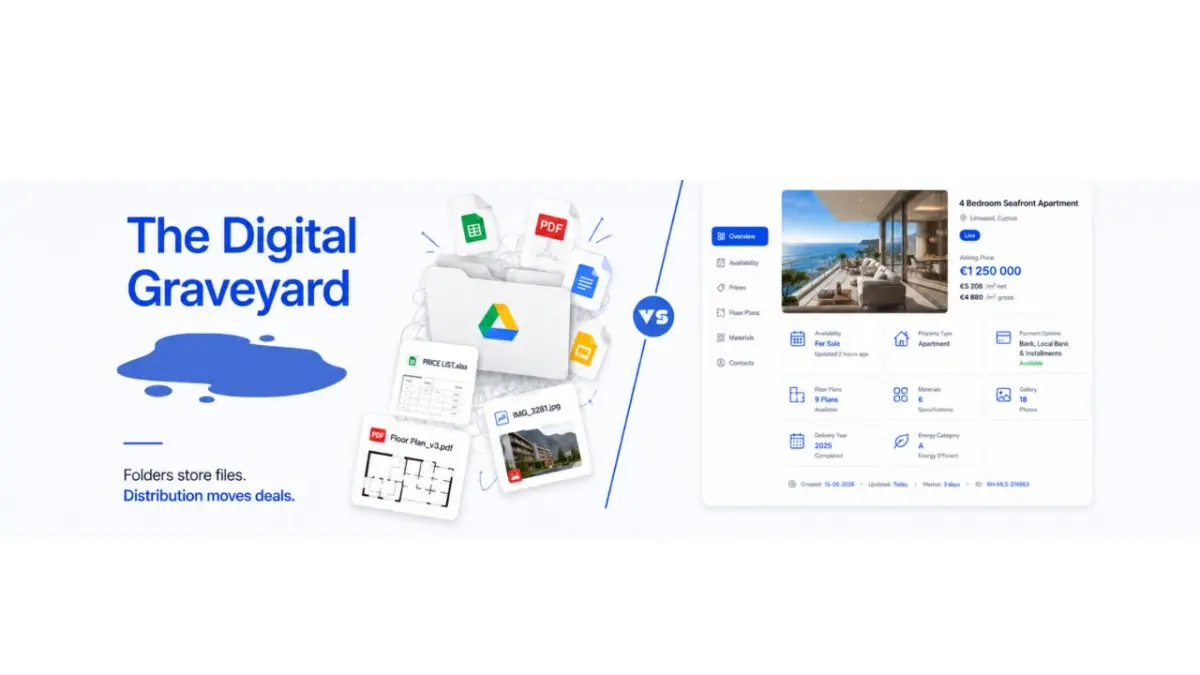
Google Drive is useful for storing files, but it is a weak sales channel. A project folder may include PDFs, price lists, floor plans, renders, payment terms, and presentations. An agent speaking to a buyer, however, needs current availability, the right price, clear materials, and confidence that the information can be used immediately.
The mistake starts when a shared link is treated as distribution. A link opens a folder, but it does not tell the agent which file is current, which unit is still available, or whether the details need to be confirmed with the sales team. Project inventory may be shared but still not ready for sale.
The problem becomes visible when updates move faster than folders. A new price list is uploaded, but an older one remains saved in a chat. Availability changes, but not every agent sees the update. A buyer asks about a unit, and the broker has to check several sources before answering. This is a distribution problem.
A project does not sell simply because it has been uploaded to the cloud.
Why Folders Slow Down Sales
A buyer asks for the current price. The agent opens a folder, finds several similar files, searches for the latest floor plan, checks the payment terms, and messages a manager to confirm availability. Each step delays a useful answer.
For the developer, it may look as though everything has been sent. For the agent, the folder creates a risk of quoting an old price, showing an unavailable unit, or sending the wrong presentation. Brokers are more likely to work confidently with projects they can understand and present without repeated checks.
That is why project distribution is about more than storage. It is about making information usable across a professional network.
What Agents Need Instead of a Shared Folder
Agents need inventory they can work with: available units, current prices, floor plans, payment terms, visuals, and a clear project summary. When these are scattered across folders, PDFs, chats, and emails, agents spend time assembling information instead of speaking with buyers.
A shared link provides access to files. It does not, by itself, identify the current version or organise units for a property search. A distribution system should help agents answer practical questions:
- Which units are available?
- What is the current price of each unit?
- Which floor plan and materials belong to it?
- What information may be shared with a buyer?
- Who can confirm a detail or receive an enquiry?
MLS RealtyHub gives developers a structured place to manage projects, units, and approved materials. Professional access depends on the account and the permissions set for each record. Developers can explore the available project tools through the MLS RealtyHub developer account.
Why Structure Matters More Than More Files
More files do not necessarily make a project easier to sell. Thirty documents may look comprehensive to the developer’s team, but an agent still has to open them, compare versions, and decide what applies to the buyer’s chosen unit.
The goal is to make the right information easier to find and maintain. A structured project record helps distinguish one unit from another and gives the responsible team a clearer way to update prices, availability, and approved materials.
This matters in Cyprus, where an agent may be comparing several developments across different districts and budgets. A project that is easy to navigate is easier to include in a relevant client selection.
Why Syndication Should Move Inventory, Not Links
Sending a folder link asks each broker to build a presentation from separate documents. Sharing structured inventory gives authorised partners a clearer starting point for the client conversation.
Effective property distribution depends on the quality of the information, the permissions attached to it, and how updates reach the people using it. A connected website or feed may support wider distribution when separately arranged, but the project record must still be maintained by the team responsible for it.
If agents must search old messages and request confirmation for every unit, the project has been stored. It has not been made easy to present.
Final Point
Google Drive and Dropbox remain useful for storing documents. Selling through an agent network requires another layer: structured unit information, clear sharing rules, and a dependable process for updates.
A project becomes easier to work with when an agent can find the relevant unit, review its current details, and know whom to contact for the next step.
Folders store files. Structured distribution helps agents use them.
Frequently asked questions
Can a developer still use Google Drive alongside MLS RealtyHub?
Yes. A shared folder can hold source documents and other files. The project record gives agents a more structured way to find unit information and approved materials for their work.
Does uploading a project make it visible to every agent?
No. Access to project information depends on the developer’s setup, the agent’s account, and the permissions attached to the records.
Who is responsible for keeping unit prices and availability current?
The developer or professional responsible for the project record must update it when details change. A structured system makes those details easier to manage and share, but it cannot correct information that has not been updated.