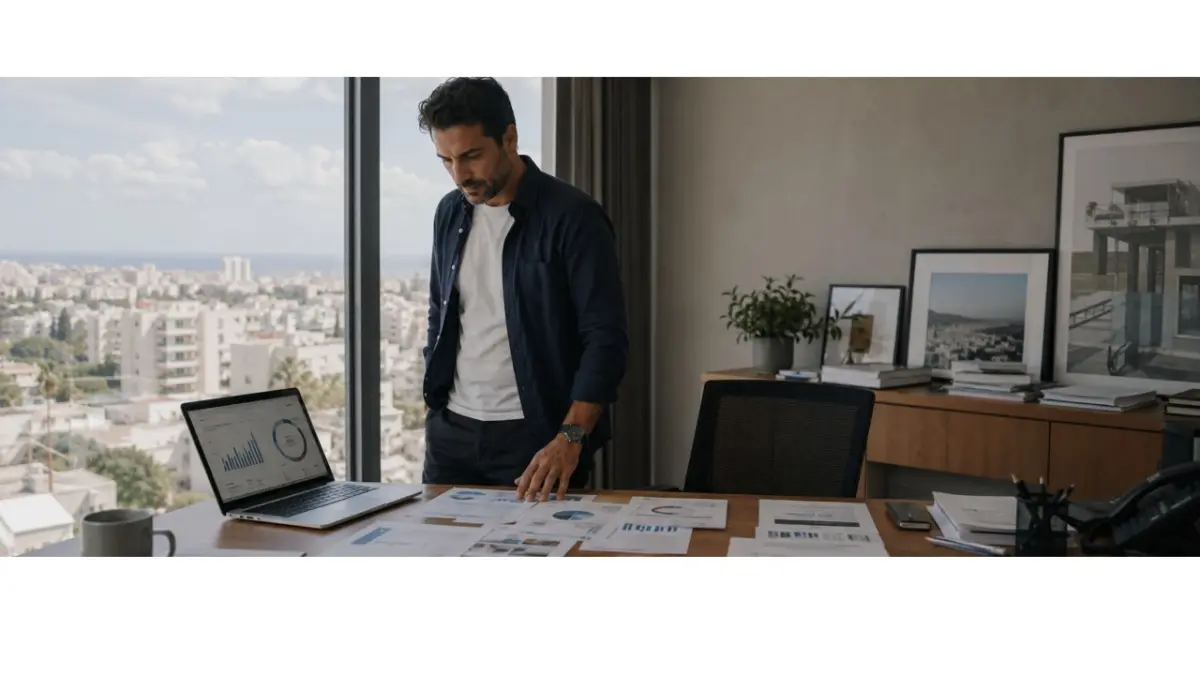
Andreas was the commercial director of a property development company in Cyprus. His role covered more than sales targets: he was responsible for how projects reached the market, how agents accessed information, how advertising channels performed and how enquiries moved into the sales process. That was why the monthly reports on his desk had to show more than lead volume — they had to connect spending, buyer interest and actual sales conversations.
For several years, the company had relied heavily on property portals. They gave new projects reach, introduced them to a broad audience and made it easier for buyers to discover available properties. Over time, however, the team had started treating visibility as the main sign of success: if views and clicks went up, the campaign was considered to be working.
This month, two charts were open on the meeting-room screen. The first showed that listing views had risen sharply over the previous three months. The second tracked enquiries that the sales team could confidently connect to a specific project, unit and campaign — and that line had barely moved.
The Report That Was Missing the Buyer
— Visibility is up 28%, — said the head of marketing as he moved to the next slide. — We increased exposure for two projects, so we’re seeing more views, clicks and contact requests. On paper, the campaign looks solid.
— And what do we actually know about the people behind those numbers? — Andreas asked. — Which layouts did they compare? Which units did they return to? Was it the price, location, floor plan or a particular apartment that pushed them to enquire?
The room went quiet. The team could show views, clicks and completed forms, but it could not reconstruct the buyer’s full decision-making process. Once someone entered the general enquiry flow, most of that person’s previous activity disappeared, leaving the sales team with little more than a name, a phone number and a short message.
Where Paid Reach Came to an End
To move the conversation away from charts and into the real buyer journey, Andreas asked the team to open one recent enquiry. The buyer had found the project on a portal, viewed the images, read the description and clicked the contact button. The sales manager received the person’s details, but could not see which units they had compared or which floor plan they had opened immediately before submitting the form.
— So we know where they found us, but we don’t really know how they were choosing, — Andreas said. — And if they decide to continue on our website, what happens next?
The company website had a polished project page with renders, location details, key features and a general contact form. What it did not have was a current list of available units. A buyer could read about the development, but could not check live availability, compare layouts or enquire about a particular apartment without asking the sales team to start the search all over again.
A Useful Channel and Portal Dependence Are Not the Same Thing
No one in the room was suggesting that the company should walk away from portals. They did their job well: they gathered demand, supported early-stage discovery and gave projects access to a large audience. The real question was how much of the buyer journey the developer had handed over to an external platform.
Dependence began when the portal stopped being one discovery channel and became almost the entire buying environment. The developer still controlled construction, pricing, availability and the advertising budget, but the buyer’s next step was shaped by someone else’s interface. A large share of first-party learning — what buyers viewed, compared and returned to — stayed outside the company’s own systems.
Each new campaign therefore began with another purchase of visibility. Previous campaigns generated contacts, but did little to improve the company’s website, data or follow-up process. Paid reach kept growing while the developer’s own buyer infrastructure moved forward at a much slower pace.
Four Questions for the Company’s Own System
Andreas walked over to the whiteboard and wrote down four questions. Where can buyers see live inventory? Who controls their next step after the first view? What demand data stays with the developer? Can the sales team connect an enquiry to its channel, project and specific point of interest?
The answers made one thing clear: this was not simply a question of increasing or reducing the portal budget. The company needed a more connected distribution model in which external channels generated reach without owning the entire route that followed. Once interest had been created, buyers needed a clear way to continue within the developer’s own infrastructure.
Portals could remain a discovery channel, while agents could introduce suitable projects to qualified buyers. MLS RealtyHub could maintain a single source of live inventory, the developer’s website could display current units, and each enquiry could enter the CRM with its source and context attached. External reach would still play a major role, but it would feed into a system the company could actually manage.
When More Noise Does Not Mean Better Listening
After the meeting, Andreas looked at the two charts again. The gap between them now made sense: the team had strengthened the beginning of the journey without improving what happened next. More people were seeing the projects, but the company was not necessarily learning more about how those people made decisions.
The issue extended well beyond a single report. A developer can speak louder to the market without becoming any better at hearing what the market is saying in return. Control starts when the company can see where a buyer goes next, retain useful first-party data and continue the conversation at the right moment.
That afternoon, Andreas sent the team a short note: “Keep the reach. Fix the route.” It was not yet a complete strategy, but it gave them a clear place to start.
Author
This material was written by Maria Vashchenko.
For questions, collaboration, or further discussion, feel free to contact me on LinkedIn.