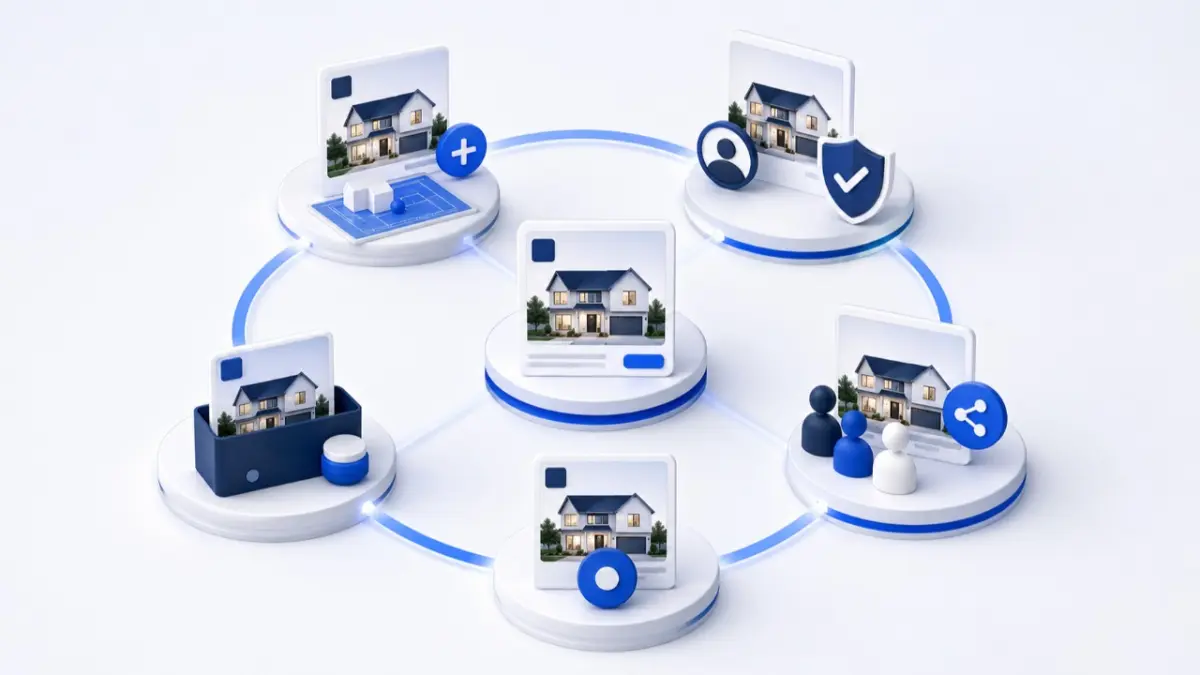
Real estate listing management software is a system in which professionals create, verify, publish, update, and archive property records. It brings listings, access rights, change history, and external distribution into one environment. Agents gain a reliable search tool, agencies maintain shared inventory, and developers manage projects down to individual units.
What a Listing Management System Includes
The property record is the core of the system. It contains specifications, price, status, media, and details of the responsible party, while connecting them to editing permissions and distribution channels. Property listing software therefore covers the full lifecycle, from initial entry to sale, withdrawal, or archiving.
How It Differs from an MLS, CRM, and Property Portal
Real estate listing software manages properties, while a CRM focuses on clients and communication. A portal displays offers publicly, and a company website represents its brand. Both may receive records from the listing system without becoming their primary source.
An MLS is not a complete synonym either. It is a model for professional inventory sharing, while mls listing software provides the interface used within that network. A broader platform may serve an agency, a developer, or a private partner network and connect to an MLS when required.
How a Property Moves Through the System
The process starts before publication. The responsible professional must first confirm the right to represent the property and prepare the source information. The listing then moves through a connected sequence:
- A responsible team member creates the record and completes the required fields.
- Photos, floor plans, documents, and a description are added.
- The system checks data format and completeness and flags possible matches.
- The owner assigns editors and selects the appropriate visibility level.
- An approved property becomes available in professional search.
- Permitted fields are sent to the website or external platforms.
- Price, availability, and status are updated in the primary record.
- A sold, withdrawn, or expired listing is moved to the archive.
Rules vary by platform: a record may be published automatically or require approval. At every stage, the team should know who controls the data, who made each change, and which version is current.
Data Requirements for Different Property Types
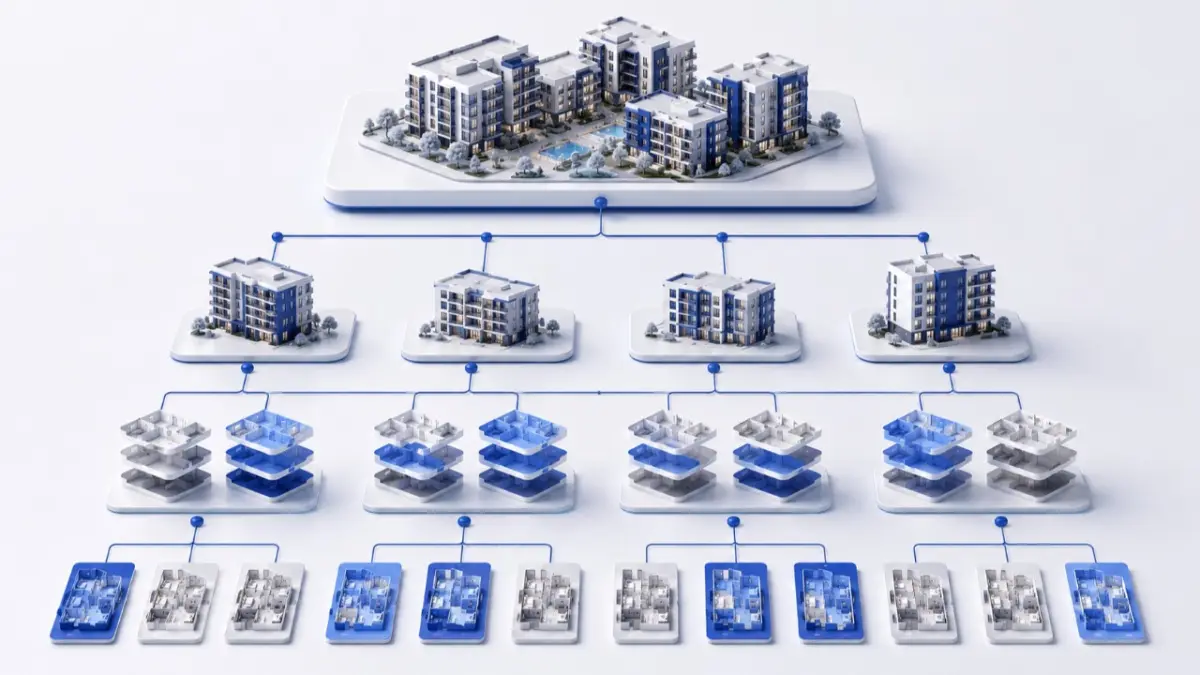
A resale apartment needs specifications, price, status, media, and viewing conditions. A new development requires a project–phase–unit hierarchy so that the details and availability of every unit can be managed separately. Commercial properties introduce another set of fields:
- property use and building class;
- sale or lease terms;
- available and rentable area;
- tenant information and lease terms;
- income and return indicators;
- confidential documents and access restrictions.
Commercial real estate listing software should therefore be assessed by its ability to store specialist data, not only by the appearance of its pages. Companies working across several segments also need custom fields for different property types.
Who Can View and Edit Information
Permissions determine whether a record remains a private draft, becomes available to the company, enters a partner network, or appears publicly. The author may edit the property, a manager may review the team’s records, and an invited agent may only see approved information. Common visibility levels include:
- a personal draft;
- internal inventory for a team or office;
- a record shared across a professional network;
- access limited to selected partners;
- a public version for websites and portals.
The organization supplying the information will generally expect to retain control, although the contract may set different terms. Before choosing a platform, the company should check its rights to export or delete data after the subscription ends.
How Data Quality and Accuracy Are Maintained
Required fields and standardized formats make records easier to search. The system may detect missing values, invalid formats, inconsistent statuses, or likely duplicates based on an address, coordinates, images, and specifications.
Software cannot guarantee flawless inventory. The same address may represent a legitimate co-listing, while a rewritten description may hide a duplicate. Automation also cannot know that a unit has been sold unless someone changes its status. Possible matches still require review, and every organization needs rules for keeping prices and availability current.
How the System Supports Agents and Agencies
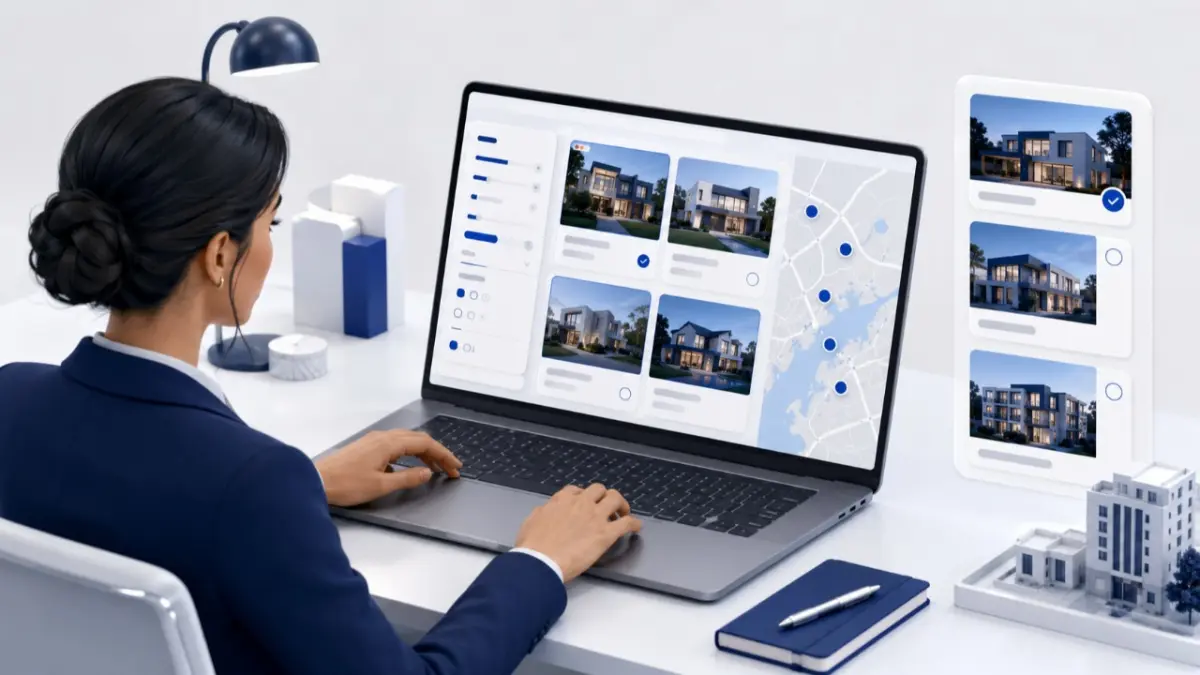
Before meeting a buyer, an agent should not have to collect options from websites, messages, spreadsheets, and old presentations. The agent can set a budget, location, property type, and required features, then save a shortlist. Notifications may flag a new match or status change before a viewing.
Shared inventory helps an agency in several ways:
- it identifies the person responsible for every property;
- it gives employees consistent rules for completing records;
- it helps reveal conflicting versions of the same information;
- it gives colleagues access to current offers;
- it preserves completed records for history and analysis.
The platform does not replace professional judgment or responsibility. It lets the team discuss the client and the next action instead of determining which spreadsheet is current.
How Developers Manage Projects and Units
For a developer, the project page alone is not enough. The system must also track each unit and connect the development overview to floor plans, prices, specifications, and availability. Partners see the part of the inventory they are permitted to use, while the project owner retains control of the primary record.
This becomes especially important when information changes frequently:
- old PDF files continue circulating after a new version is issued;
- a correction in a chat can disappear among other messages;
- separate spreadsheets create competing sources of information;
- one primary record lets partners return to the current status.
Update speed depends on the available integrations. Even when the primary database changes immediately, a website or portal may receive the information later. Synchronization frequency should therefore be verified.
How Listings Reach Websites and Other Systems
APIs and structured feeds send approved fields to websites, portals, and other tools. IDX is used mainly in markets that support this model, so it is not a universal distribution method. Syndication also depends on available destinations and platform rules.
A CRM connects an enquiry with a property and supports further communication. The main record remains in the listing system, the public channel displays an approved copy, and the CRM stores buyer details. This separation prevents inventory data from becoming mixed with lead management.
Free, Open-Source, and Commercial Options
Free property listing software may be a trial, a restricted plan, or a service with paid extras. No subscription fee does not mean no operating cost: limits on users, listings, exports, or integrations can obstruct the normal workflow.
Open source property listing software gives a company access to the source code but also requires deployment, security, backups, maintenance, and updates. A business may choose real estate listing software open source for extensive customization, yet without a capable technical team it can cost more than a ready-made product. A commercial platform is usually better suited to organizations that need guided implementation, support, scalability, and maintained integrations.
How to Select the Right Platform
Selection should begin with the actual workflow, not a long feature catalogue. The company must understand which properties it manages, who updates records, who needs access, and where the data must go.
During an evaluation, check:
- support for the required properties, projects, and units;
- user roles, editing rights, and visibility levels;
- data ownership, export, and deletion rules;
- validation of required fields and possible duplicates;
- search, filters, saved selections, and notifications;
- APIs, CRM connections, websites, and regional distribution channels;
- security, backups, and change history;
- migration, training, and the quality of support;
- total cost, including setup and ongoing maintenance.
The right platform follows the real path of a property and removes the need for parallel sources of information.
How to Review the Current Process
Follow one property from the moment its data is received until the record is archived. Identify where the listing is created, who checks it, how the price changes, which partners can access it, and when an update reaches the website. This reveals duplicates, delays, and gaps in responsibility. The company can then assess whether MLS RealtyHub matches its inventory structure and collaboration model.
Frequently Asked Questions
Can listing software be used without joining an MLS?
Yes. Some platforms operate as an agency’s internal inventory, a developer’s management system, or a private partner network and do not require a connection to a traditional MLS.
Who owns the information added to the system?
The organization providing the data will normally expect to retain control and responsibility, but the exact ownership and usage terms must be checked in the provider agreement.
Does the software guarantee that there will be no duplicates?
No. Automated validation can identify likely matches, but it may produce false results and cannot replace human review.
Can the system manage individual units within a project?
Yes, if it supports a hierarchy of projects, phases, and units. This capability is not available in every product.
How is free software different from open-source software?
A free service may have closed source code and plan restrictions. An open-source solution allows the code to be modified but requires the company to provide its own technical resources.
Is IDX required in every country?
No. IDX is used mainly in the United States and Canada. Other markets rely on their own APIs, feeds, and distribution arrangements.
Author
This material was written by Maria Vashchenko.
For questions, collaboration, or further discussion, feel free to contact me on LinkedIn.