Property developer branding connects a company’s positioning, portfolio, messages, visuals and working standards. For developers in Cyprus, it determines how consistently the same identity and information appear on websites, brochures and agency materials. Effective developer branding cyprus starts with a clear proposition and continues through rules for naming, presenting and updating every development.
What does a property developer brand include?
A brand is the impression formed by buyers, agents and partners. Its visible layer includes the name, logo, colours and typography; the complete system also covers positioning, portfolio logic, communication, evidence behind claims and the experience of requesting project information.
The corporate brand remains recognisable, while each development may have its own name, story and visual accent. A campaign serves a defined launch or audience but does not replace clear specifications, current availability and a consistent response process.
Why does branding matter in Cyprus real estate?
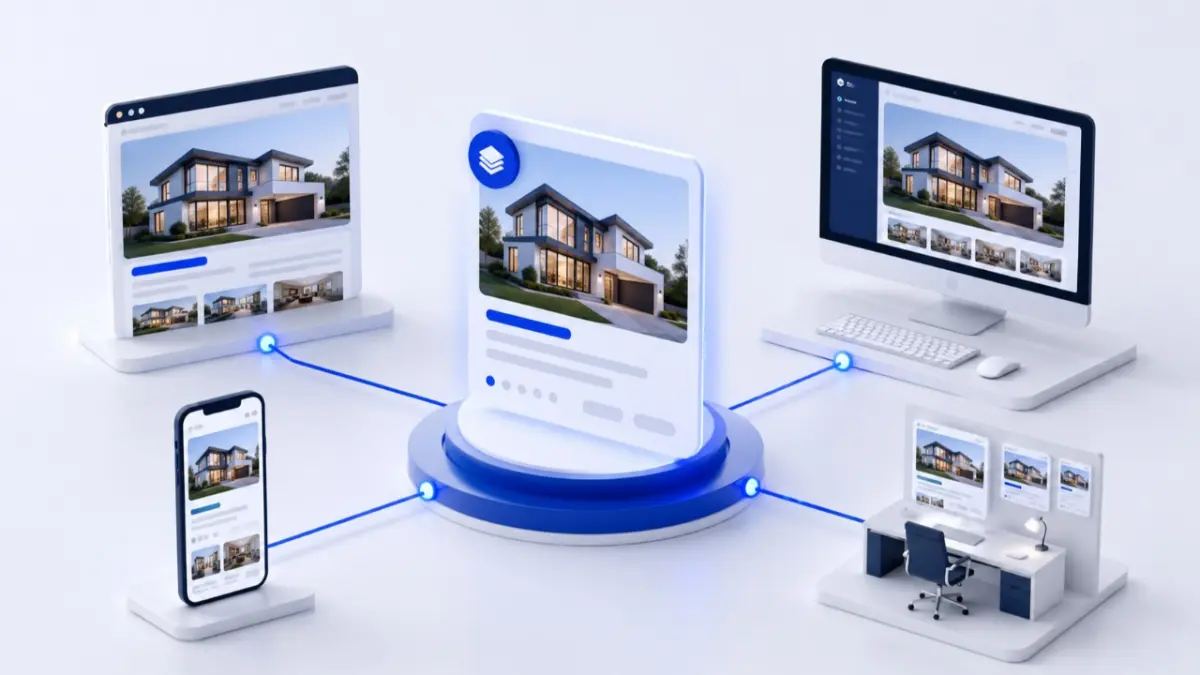
Cyprus combines local and international demand, distinct district markets and distribution through in-house teams, licensed agencies, portals and professional platforms. A coherent identity connects encounters across an agent, company website and brochure.
Messages must reflect the project and audience. A Nicosia development may emphasise different facts from a project in Paphos or Larnaca. Each language can adapt explanations, but names, areas, prices, specifications, construction stages and availability should remain aligned.
How should developers build a brand before choosing visuals?
The starting point is evidence. Teams should define where the company operates, what it develops, who it serves and which qualities it can demonstrate. Buyer questions, agent feedback and enquiry records show where communication needs clarification.
Teams planning a Developer Dashboard should also define which role owns each project field and who approves information before it reaches sales or agency channels.
A practical foundation covers:
- business goals, locations and development categories;
- priority audiences and their information needs;
- positioning supported by specific evidence;
- the relationship between the company and project brands;
- approved terminology, tone and multilingual rules;
- principles for claims, images and descriptions;
- ownership of approvals, source data and updates.
Positioning should use facts about location expertise, specifications, design approach, delivery record or service. Sales teams and agencies can then repeat the distinction accurately.
Which brand architecture suits the portfolio?
The choice depends on project variety, audience overlap and how strongly recognition should transfer across the portfolio.
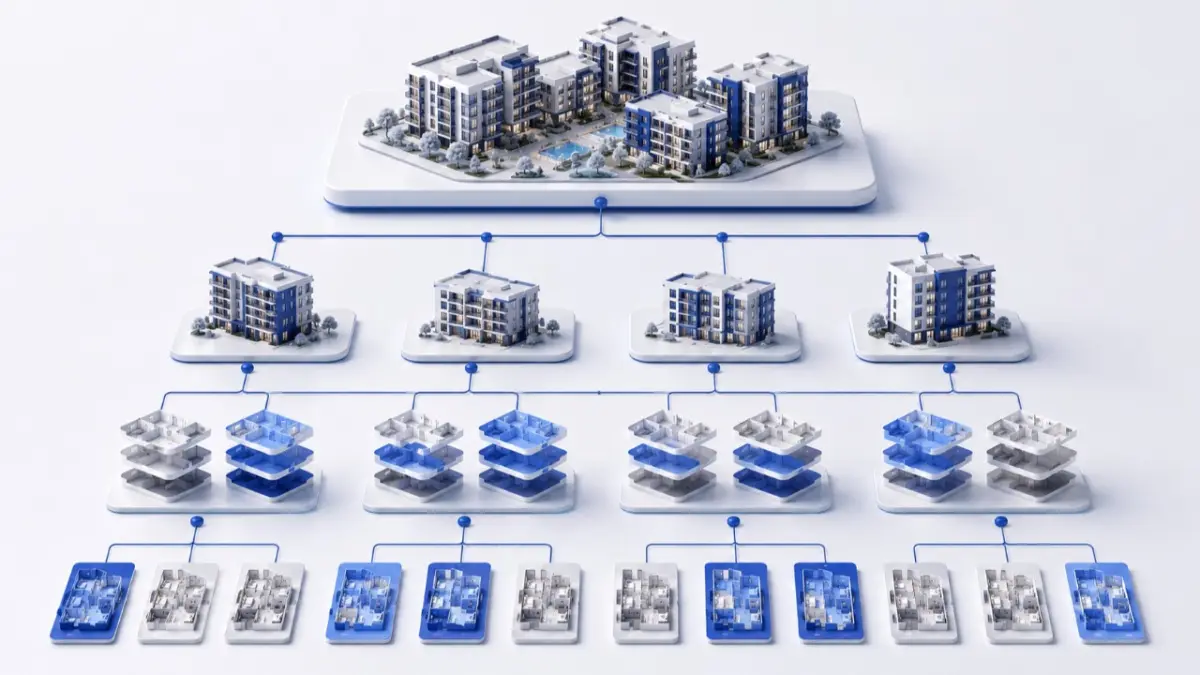
- One corporate brand: the company name dominates every project, while developments retain clear distinctions.
- Company plus project names: related developments share one visible system and clear naming rules.
- Endorsed projects: each project leads with its own identity and a visible developer connection.
- Independent projects: each development has little corporate connection, so recognition may not transfer.
In every model, facts, contacts and approvals remain consistent, while imagery and message emphasis may vary by project.
What belongs in a developer brand kit?
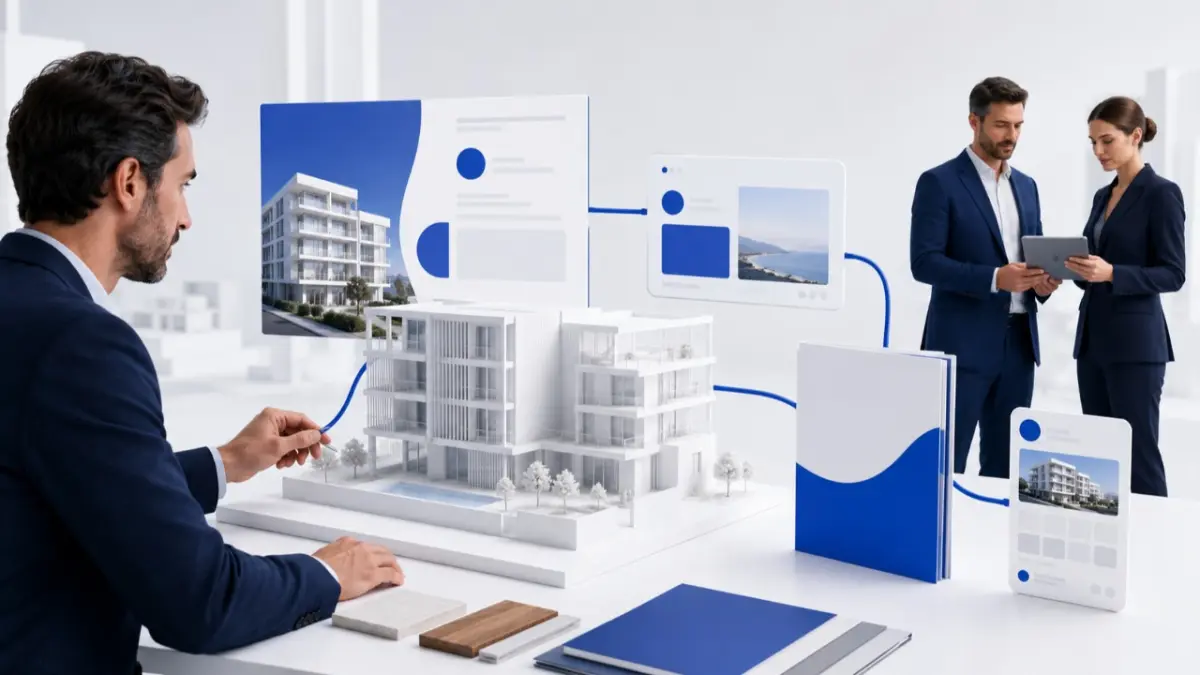
The brand building property developers undertake should produce practical guidance. Its strategic layer covers positioning, audiences, company profile, tone, naming and approved claims. Its visual layer defines logos, colours, typography, imagery and layouts for print and mobile screens.
The operational layer includes document templates, approved descriptions, image and floor-plan libraries, file-naming rules, partner instructions and an approval owner. The brand remains recognisable without forcing every project to use identical messages.
How can project materials remain consistent?
Formats differ, but source information should be controlled. Across project pages, brochures and posts, the official name, location, property types, areas, specifications, status, prices, availability and contact must not conflict.
Developer CRM Integration can carry approved project context into enquiry records and follow-up tasks, while current unit availability remains controlled at its source.
A repeatable workflow is enough to create control:
- The project owner supplies verified company, project and unit information.
- Marketing uses the approved template and current source assets.
- Sales or product specialists check facts and buyer-facing explanations.
- The brand owner reviews identity and authorised claims.
- The approver releases the material for use across approved channels.
- When information changes, the source record and distributed files are updated.
Design teams manage presentation; the inventory owner confirms prices, availability and specifications. Visual approval is not a factual check.
What do agents need from this system?
Agents need an approved developer profile, project descriptions, current unit data, plans, images and a route for questions. Instructions should distinguish buyer-facing and professional files.
Developer-branded materials keep the source visible, unbranded materials support agency-led conversations, and co-branded materials present both parties. Permissions, contact rules and replacement procedures should be defined for each format.
Fictional Cyprus example: one brand, two projects
Imagine Meridian Homes Cyprus, a fictional developer with an apartment project in Nicosia and a residential project in Larnaca. Both use one corporate identity but have separate names, imagery and location stories. Marketing owns descriptions and templates, a project manager confirms specifications, and an inventory coordinator owns unit status and prices.
Agencies receive branded brochures and approved co-branded presentations. When a Larnaca unit is reserved, the coordinator changes the source record, marketing replaces the unit information and agencies receive notice. The system still depends on timely updates and consistent use of approved materials.
How can MLS infrastructure support brand governance?
A website explains the developer, a portal supports discovery, a CRM manages leads and a cloud folder stores files. An MLS structures developer, project and unit information for professional use. These systems complement one another.
MLS RealtyHub supports structured project and unit presentation, current availability, project materials, developer-to-agent distribution, controlled sharing and branded or unbranded project links. It does not create positioning; it organises approved information so the marketing identity can remain consistent across professional distribution.
Developer API Integration becomes relevant when approved project or unit records need to move between connected systems while their ownership and update rules remain clear.
Developer branding checklist
- Is the company position clear and evidence-based?
- Are company and project identities visibly related?
- Do all teams use official project names and descriptions?
- Are all language adaptations based on the same facts?
- Are templates prepared for sales and agency materials?
- Are branded, unbranded and co-branded uses defined?
- Is each approval and data update assigned to one owner?
- Can outdated brochures and price lists be replaced quickly?
- Do agents know where to find current unit information?
Conclusion
Developer branding works as a management discipline connecting strategy, identity, project facts and distribution. A clear system gives internal teams and agencies a shared way to present the company while allowing individual developments to address their own locations and audiences. Its practical value comes from recognisable communication, reliable source information and defined ownership throughout the project lifecycle.
Build a consistent developer-to-agent workflow
Use MLS RealtyHub to organise approved project information, current unit availability and presentation materials for controlled professional distribution. Request a walkthrough to review how your developer brand and existing project workflow can be represented across the platform.
FAQ
What is developer branding in real estate?
It is the system for managing a development company’s positioning, messages, visual identity, portfolio presentation and communication standards.
Why does branding matter for property developers in Cyprus?
It helps people recognise a developer across districts, languages and channels while keeping related project information aligned.
What should a property developer brand kit include?
It combines messaging and visual rules with approved descriptions, templates, assets, partner instructions and clear approval ownership.
How is a developer brand different from a project brand?
The developer brand represents the company and portfolio. A project brand presents one development through its own name, story and visual accent.
How can developers keep project materials consistent?
Use one verified source, approved templates, assigned approval roles and a process for replacing outdated materials.
Should agents receive branded or unbranded materials?
The format depends on the cooperation model. Permitted use, contact rules and update procedures should be defined for each type of material.
How can an MLS support developer brand consistency?
An MLS can structure records and distribute approved information through controlled professional access. It does not replace strategy or data ownership.
How often should developer brand materials be updated?
Review guidelines regularly and update prices, unit status, specifications, construction information and contacts whenever source data changes.
Author
This material was written by Maria Vashchenko.
For questions, collaboration, or further discussion, feel free to contact me on LinkedIn.