Developer listing templates give property developers a repeatable way to present projects and individual units across their website, agent network, portals, brochures and property distribution systems. The goal is not to make every development look identical. It is to ensure that buyers, agents and internal sales teams can find the same essential facts, understand what is available and act on current information.
What Is a Developer Listing Template?
A developer listing template is a reusable structure for project data, unit specifications, media, availability, prices and disclosures. It combines content rules with a repeatable page layout rather than serving only as a design file.
Developer listing templates cyprus describes a practical need for a framework reflecting local projects: clear area definitions, unit references, verandas, parking, construction stage, VAT wording where confirmed, and accurate status information.
Why Does a Standard Template Matter to Developers and Agents?
A consistent template helps a developer launch pages faster and give agents material they can use without rewriting basic facts. During a buyer meeting, the agent can identify a unit by its stable reference, check its status and open the approved floor plan without searching through separate messages.
Which Information Belongs to the Project and Which Belongs to the Unit?
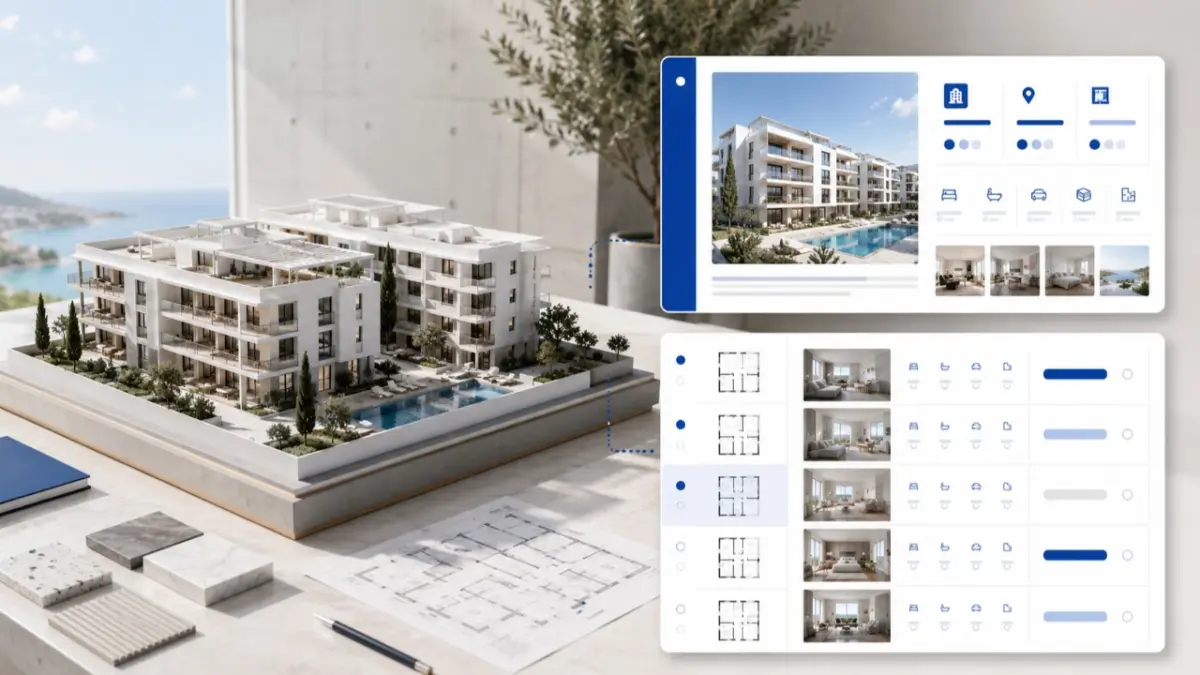
Project and unit information should be stored separately. A project record describes the whole development; a unit record identifies one apartment, villa, office or shop within it. Mixing the two creates repeated text and makes updates harder to control.
Project-level information
- Project name and developer
- District, municipality and map
- Development concept and unit mix
- Construction stage and expected completion
- Amenities and common facilities
- Master plan and project gallery
- Permit and title status when verified
- Approved project description
Unit-level information
- Stable unit reference
- Building, block and floor
- Bedrooms and bathrooms
- Internal area and verandas
- Plot, garden, parking and storage
- Orientation, view and unit floor plan
- Current price, VAT note and availability
- Unit-specific features and update date
This division prevents a project-wide change from being edited separately on dozens of unit pages. Construction stage belongs at project level; a price or reservation change belongs to the relevant unit.
What Should Appear at the Top of a Project Page?
The opening screen should explain the offer immediately. A useful project page layout starts with:
- project name, location, type and current stage;
- a short factual summary and approved hero image;
- available unit types or price range, if approved;
- one clear enquiry action.
Key facts, availability, location, amenities and completion information should follow. Galleries, specifications, master plans and documents can appear later.
Which Fields Should Every Unit Listing Include?
Each unit needs a stable reference that remains unchanged when its price or status changes. The rest of the specification should use consistent labels and measurement rules across the development.
Core fields include the property type, building, floor, bedrooms, bathrooms, internal area, verandas, plot or garden where relevant, parking, storage, price, currency and availability. Add the floor plan and the date changing information was last checked.
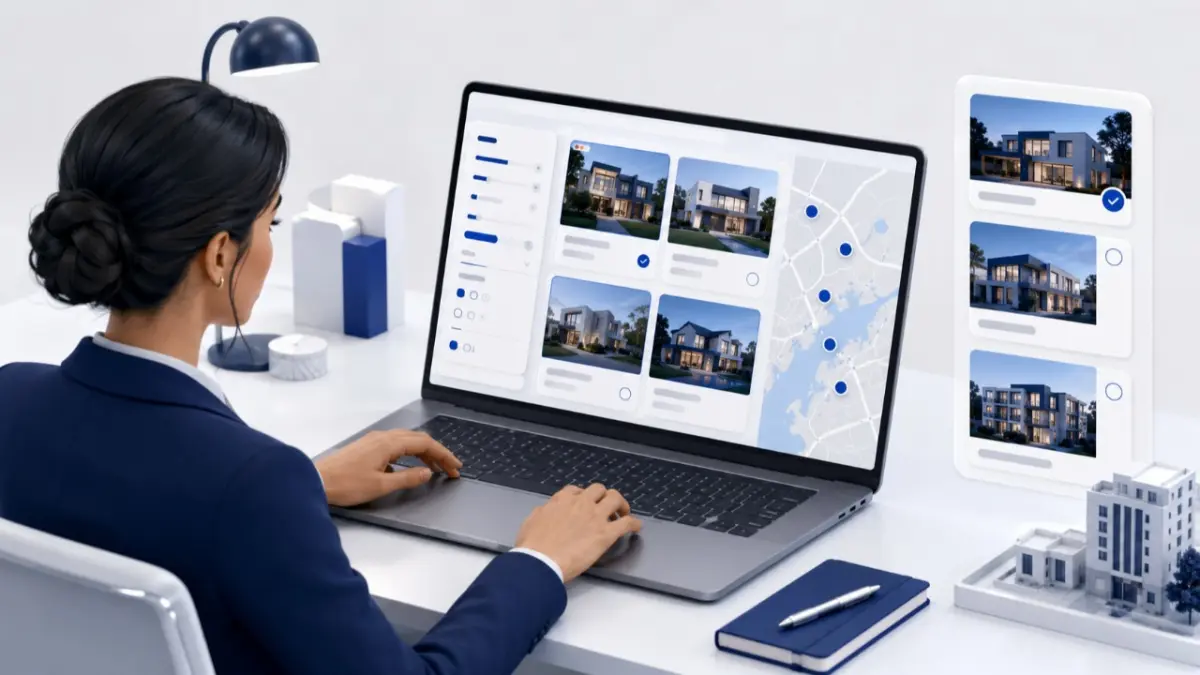
Use structured fields for details people compare or filter. Reserve descriptive text for the project concept, neighbourhood and specification. Mark unknown details as “not yet confirmed”, “not applicable” or “subject to final approval” rather than leaving ambiguous blanks.
How Should Images, Renders and Floor Plans Be Presented?
Visuals should follow the sales stage. Renders may lead an off-plan launch; completed projects should prioritise photographs. Label every conceptual or representative image accurately.
A usable media pack contains a hero image, exteriors, representative interiors, amenities, location context, plans and dated construction photographs where relevant.
Floor plans should show the unit reference, orientation, room labels, area boundaries and a version date. They must remain legible when enlarged on mobile.
Because channel requirements differ, retain high-resolution masters and prepare versions with consistent crops, filenames, captions and useful alt text.
How Can Prices and Availability Stay Current?
Price and status are living fields, so the template needs rules as well as placeholders. Define the permitted status values—for example, Available, Soft hold, Reserved, Contract signed, Sold, Withdrawn and Pending approval—and specify who can apply each one.
Every price record should state the currency, effective date, inclusions and approved VAT wording. Completion estimates require a date and appropriate qualification when they are not contractually guaranteed.
PDFs and spreadsheets remain useful as dated snapshots, but live availability should come from an approved source. Each export needs a version number and effective date.
How Should One Template Work Across Different Sales Channels?
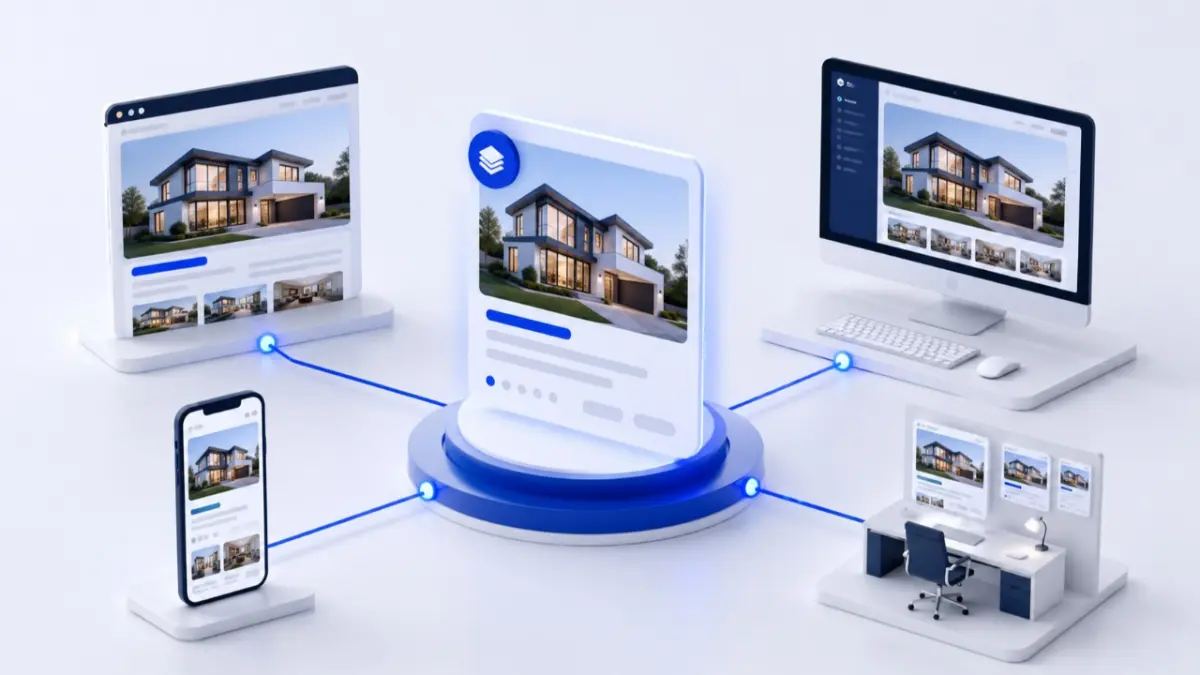
The same data can support several formats. A website carries the full story and enquiry form; a portal uses key filters and shorter copy; an agent page needs inventory and approved materials. A brochure remains a dated presentation asset.
In a listing design mls workflow, structured fields let agents filter, compare and share listings. MLS RealtyHub can sit between approved developer inventory and the agent network, while the CRM records contacts, activities and pipeline stages.
The website presents the project publicly, portals create discovery, the CRM manages leads, and a document repository controls approved files. Each tool keeps its own role.
What Does a Reusable Template Look Like in Practice?
Consider an off-plan apartment development in Limassol. One project record contains the location, construction stage, expected completion, amenities, renders and master plan. Each apartment receives its own reference, areas, floor, parking, price, availability and floor plan.
The full record supports the website; selected fields support MLS RealtyHub and portals. Agents receive current unit cards and a dated availability matrix. Email and social posts use a smaller selection of the same facts.
When Unit A-203 is reserved, its status changes in the approved inventory source and dated exports are replaced. The project description and other units do not need to be rewritten.
What Common Template Mistakes Should Be Avoided?
- Mixing project facts with unit specifications.
- Publishing availability without a status date or update owner.
- Sending several price lists without a visible version and effective date.
- Presenting renders as if they were photographs of completed features.
- Creating separate uncontrolled descriptions for every agent or portal.
- Using unsupported permit, title, rental-return or investment claims.
Developer Listing Template Checklist
Before a template is approved, confirm that:
- project and unit fields are separated and defined;
- every unit has a stable reference;
- price, VAT wording, status and dates are controlled;
- renders and representative images are labelled;
- floor plans are current and readable on mobile;
- access levels and update owners are assigned;
- the enquiry route has been tested;
- sales staff and agents can answer common buyer questions from the template.
If several answers are missing, complete the information model before refining the visual design.
How Should an Evergreen Listing Template Be Updated?
Review the template after a new project phase, price or status change, revised plan, verified legal-status update or recurring agent feedback. Review the general field structure annually.
Record the last review date and check examples, screenshots, field definitions, internal links, FAQ and CTA. Recheck legal, tax and permit wording against current professional or official guidance.
Keep Every Listing Ready for Distribution
A strong template gives the website, sales team and agent network the same approved foundation. It makes listings easier to compare and changing information easier to control.
MLS RealtyHub helps developers organise project and unit information for structured distribution to agents. Request a workflow review to see how your current inventory and project materials can be prepared for a clearer agent-facing process.
Frequently Asked Questions
What is the difference between a project page and a unit listing?
A project page describes the development as a whole. A unit listing contains the specifications, price, status and floor plan of one property within it.
Should every development use exactly the same template?
Keep field names, status rules and updates consistent. Visual style and emphasis can change by property type or audience.
Which listing details change most often?
Availability, prices, construction stage, completion estimates and sales materials require clear ownership and update dates.
Can a PDF be used as the main project listing?
A PDF is useful as a dated snapshot, but it should not be the only source of changing availability.
What information should agents receive that buyers do not see?
Agents may need cooperation terms, lead-registration rules, internal contacts and reservation instructions. Confidential information remains restricted.
How should Cyprus property areas be shown?
Use separate fields for covered internal area, covered and uncovered verandas, and plot or garden area. Explain any combined total.
Does Cyprus require one standard property listing template?
There is no single universal public layout for all Cyprus developments. Claims about permits, titles, VAT or completion still require support and review.
How often should a developer listing template be reviewed?
Review data after each approved change and assess the underlying template at least annually or when agents repeatedly request missing information.
Author
This material was written by Maria Vashchenko.
For questions, collaboration, or further discussion, feel free to contact me on LinkedIn.