How Cyprus Developers Can Use Video to Market Property Projects
Learn which property videos to create, what data to verify, how to distribute approved footage and what to update when project details change.
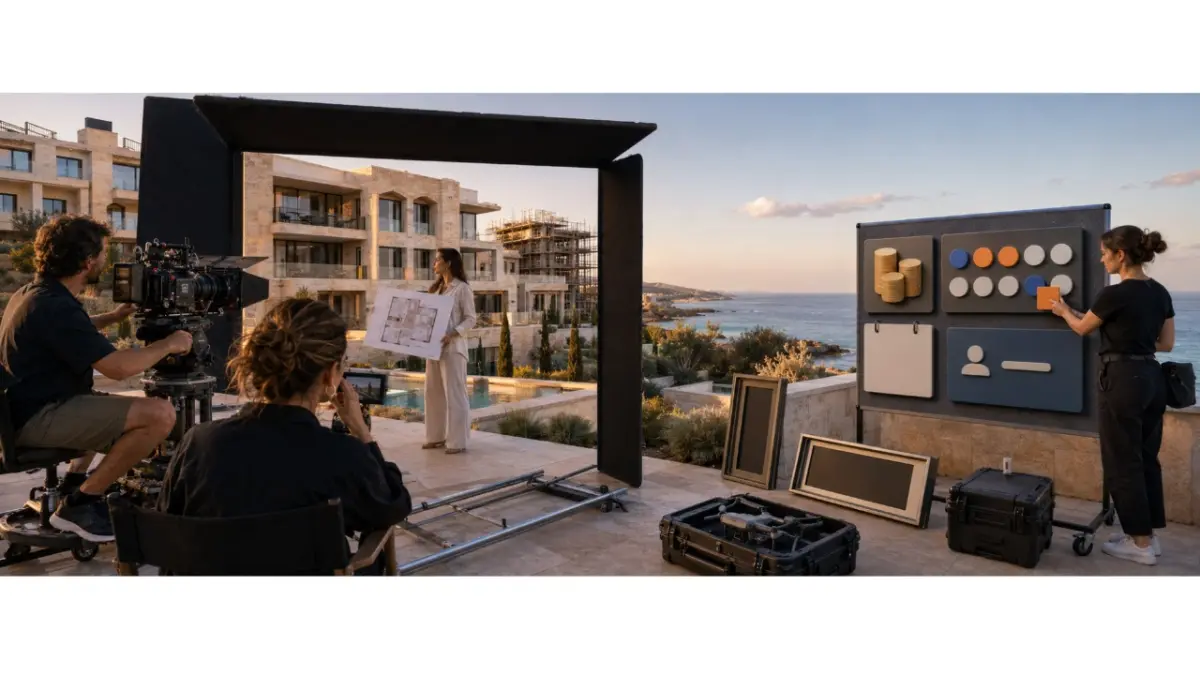
For teams building a video marketing developers cyprus workflow, every video should begin with a current project record. Video can present the architecture, location, layout and construction progress, but it should not become a separate source for prices, availability or completion dates. Details that change regularly are better kept in a controlled project record, caption or updateable page.
Verify the data before filming
Before preparing a script, confirm the project name, location, property type, size, construction stage, floor plan, materials and approved visual assets. Prices, availability and completion information require an additional check immediately before publication.
When the scriptwriter, video editor and marketing team use different versions of the project materials, discrepancies can become embedded in the final video. Correcting on-screen text or a voiceover after publication is more difficult than updating a project page, so approval should happen before editing begins.
Choose one purpose for each video
A developer does not need one long video covering every part of a development. Separate videos built around individual buyer questions are easier to understand, update and adapt for different platforms.
Useful formats include:
- a short project introduction;
- a location overview;
- a completed property walkthrough;
- a floor-plan explanation;
- a construction update;
- a presentation of individual property types;
- answers to buyer questions;
- an interview with the developer’s representative;
- a detailed YouTube overview;
- shorter versions for partner agents.
Each format should have one clear purpose. A construction update documents a confirmed milestone, a floor-plan video explains how the space works, and a location video helps an overseas buyer understand the surrounding area.
Planning project promo videos
The team should first decide what the viewer needs to understand. The video may focus on the current construction stage, a particular layout, the location or a completed property. The next step is to select the footage, verify the facts and define one clear action for the viewer.
Before editing, prepare:
- an approved script;
- current project information;
- original video and image assets;
- permission to use every asset;
- clear labels for architectural visualisations;
- the correct logo;
- subtitles;
- one call to action;
- the correct landing page or enquiry form;
- a date for reviewing the completed video.
Architectural visualisations should not be presented as footage of a completed property. If a video combines renders with actual construction footage, viewers need to understand which elements are real and which represent the intended result.
Decide what belongs inside the video
Relatively stable information can be included directly in the footage:
- the project name;
- the area;
- the property type;
- the overall concept;
- the floor plan;
- the current construction stage;
- a short call to action.
Details that change frequently are usually safer in the caption or on an updateable page:
- the price;
- availability;
- a specific unit number;
- detailed purchase terms;
- the completion date;
- contact details;
- legal notes;
- visualisation disclaimers.
This allows the footage to remain usable without preserving information that may become inaccurate after the next project update.
Structure a short property video
A video of approximately 15–30 seconds can follow a simple sequence:
- Open with the project or its location.
- Introduce one specific project fact.
- Show the property, floor plan or construction stage.
- Add relevant location context.
- Present the current status without unsupported promises.
- End with one clear action.
A practical script might read:
“Here is a new residential project in Larnaca. This video shows the façade, one approved floor plan and the current construction stage. The latest prices and availability are listed in the project record. Request the current brochure and unit list.”
The script introduces the development without embedding prices, availability or other details that may change quickly.
Select the right distribution channel
Short vertical videos are suitable for Instagram Reels, Facebook, YouTube Shorts and TikTok. They work best when they present one aspect of the project and lead the viewer towards a specific next step.
Longer videos are better suited to YouTube, a project website or a remote buyer presentation. LinkedIn can support construction updates, company communication, commercial developments and content aimed at a professional audience. Duration, aspect ratio and technical specifications should always be checked against the current requirements of each platform.
Review everything before publication
The team should follow the same approval process for every video:
- Confirm the project name.
- Verify the location.
- Check the property type and specifications.
- Review the floor plan.
- Confirm the current construction stage.
- Check the price and availability.
- Verify the completion information if mentioned.
- Confirm the rights to music, images and footage.
- Label architectural visualisations correctly.
- Review the contact details and call to action.
- Test the destination page or enquiry form.
Drone footage requires an additional review of current aviation rules, geographical restrictions and any necessary permissions. Videos showing identifiable people or private property also require appropriate consideration of consent and personal data.
Respond when project details change
A new price, availability status or property specification should first be confirmed by the responsible team member and added to the primary project record. The marketing team can then review active campaigns, published videos, captions, destination pages and materials distributed to agents.
If the incorrect information appears only in the caption or landing page, it may be possible to update it. If the video itself contains an outdated price, date or status, the campaign may need to be paused and the creative replaced. The available editing options depend on the platform and campaign type.
Use MLS RealtyHub as the project source
MLS RealtyHub allows developers to manage projects and portfolios, update prices and availability, and store brochures, price lists, floor plans and confirmed media assets. Marketing teams can review this information before filming or publishing instead of collecting project details from separate folders and conversations.
Daily project management can be explored through Developer Dashboard. When project information comes from another system, the related workflow can be covered through Developer API Integration. These functions support the underlying project data but do not mean that MLS RealtyHub creates, edits or automatically publishes videos.
Confirm the capability before an mls video upload
A general reference to media storage does not confirm that video files are supported. Before transferring a video, the team should verify whether its MLS RealtyHub configuration accepts uploaded videos, external video links or only particular media types.
Confirm:
- the supported file formats;
- the maximum file size;
- duration limits;
- whether external links are accepted;
- how the video appears on the project page;
- which users can access it;
- how an outdated version can be replaced.
Until these specifications are confirmed in the official product documentation, the article should not promise a dedicated video-upload feature or state technical limits.
Distribute approved videos to agents
Developers should provide partner agents with an approved content pack rather than one unlabelled file. The pack may include a master video, vertical and horizontal versions, shorter clips, subtitles, an approved caption, a review date and rules for adding contact information.
Agents may add permitted contact details and guide their own clients, but they should not change the project specifications, visualisations, logo or approved claims. When the project changes, the developer should withdraw the old version and clearly identify the replacement.
Connect video enquiries with follow-up
Every video should lead to a defined action such as requesting a brochure, checking availability, booking a consultation or arranging a viewing. The team should decide in advance who receives the enquiry and how it will be handled.
A Developer CRM Integration workflow can connect the enquiry source with the relevant project, video, responsible team member and next action. Without this connection, views and enquiries remain isolated figures rather than part of a sales process.
Measure more than views
Attention metrics include:
- impressions;
- reach;
- video views;
- video starts.
Retention metrics include:
- average watch time;
- completion rate;
- first-second retention;
- repeat views.
Interest metrics include:
- clicks;
- saves;
- shares;
- profile visits;
- brochure requests.
Commercial metrics include:
- enquiries;
- cost per enquiry;
- enquiry quality;
- booked consultations;
- requests for specific properties;
- response time.
Strong retention indicates that the footage holds attention. It does not guarantee enquiries or sales if the offer, project information or next action is unclear.
A practical example
A developer prepares a construction update for a project in Paphos. The video shows current site footage, the confirmed construction stage and one approved floor plan. Prices and availability are kept out of the edit and remain on the updateable project page.
When availability changes, the team updates the primary project record and destination page. The video can remain in use because it does not contain the outdated information. Partner agents receive the same footage with a revised caption and current unit list.
Common mistakes
- Starting production before approving the project information.
- Embedding frequently changing prices in the video.
- Presenting an architectural visualisation as a completed property.
- Using one format across every platform.
- Publishing without subtitles.
- Using music or footage without permission.
- Ignoring restrictions that apply to drone filming.
- Sending videos to agents without a review date.
- Leaving campaigns active after their information becomes outdated.
- Measuring performance only through views.
- Failing to assign responsibility for enquiries.
- Claiming that MLS RealtyHub creates or automatically distributes videos.
The next step
A reliable property video workflow connects visual storytelling with controlled project information. Video presents the development, MLS RealtyHub supports the underlying materials, and the marketing team reviews every active asset when the project changes.
Request an MLS RealtyHub demonstration to see how project data and approved materials can provide a controlled foundation for video marketing.
Author
This material was written by Maria Vashchenko.
For questions, collaboration, or further discussion, feel free to contact me on LinkedIn.