Why Presentation Control Matters When Selling New Developments in Cyprus
See how conflicting prices, timelines and marketing materials can delay new-build sales in Cyprus and why every project needs one reliable source of information.
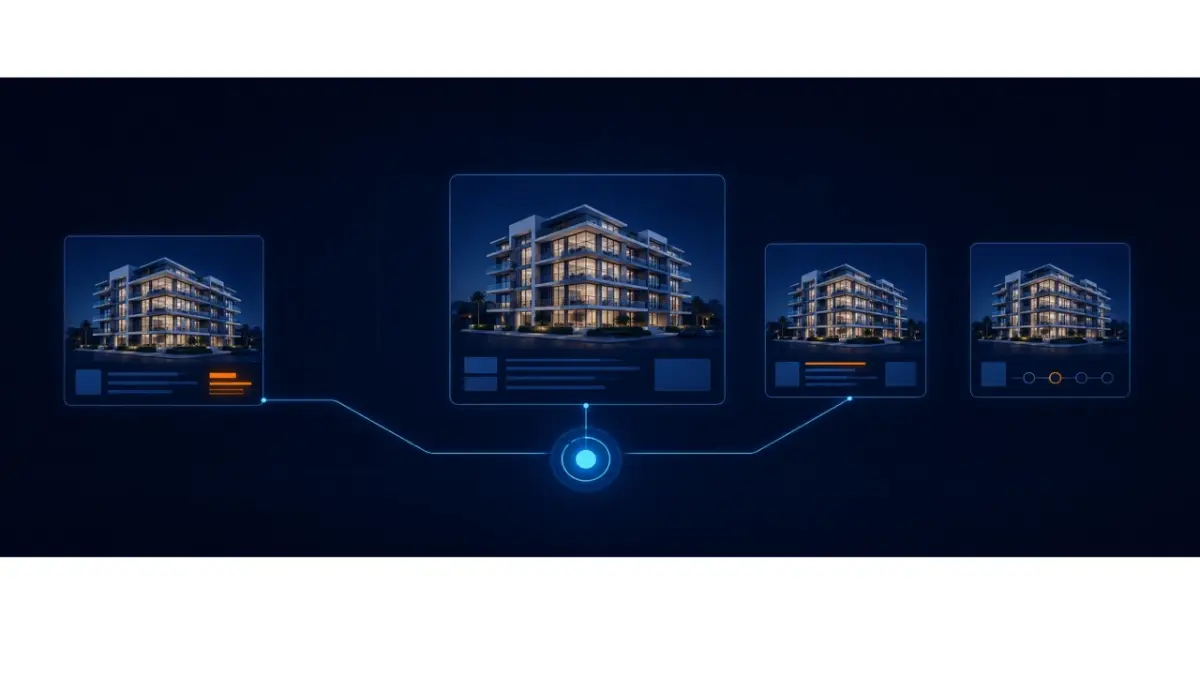
Buyers often begin evaluating a new development long before visiting the site. Their first impression comes from the presentation, floor plans, images, description, price and availability information. When those details change depending on the source, the buyer starts verifying the information instead of considering the property.
Three buyers received three different versions
Sofia Andreou was preparing for a series of meetings about a residential development in Limassol. During the week, three buyers were due to view the project through different property companies.
Before the meetings, Sofia asked to see the materials each buyer had received.
The first buyer had a presentation with current images but an outdated price. The second had received the latest price list alongside an earlier project description. The third had the correct price, but the expected completion date did not match the current construction schedule.
All three presentations described the same development. Yet each buyer had effectively been introduced to a different offer.
Sofia contacted the partners and sent them the updated materials. There was still enough time before the scheduled meetings, so she believed the issue had been resolved.
A question during the viewing
The first buyer arrived at the site on Saturday morning. He had already selected two apartments and wanted to compare their positions within the building.
During the conversation, he opened the presentation saved on his phone and asked why the price of one apartment had changed. Sofia explained that the document showed the previous price.
The buyer became cautious. He could not tell when the price had been updated or which amount had been valid when he first made contact.
He then showed Sofia the specification included in the presentation. It mentioned materials available only with a different category of apartment. Once again, Sofia had to explain the discrepancy.
The viewing continued, but the conversation was now focused on checking information. Instead of comparing the floor plans, the buyer was trying to determine which conditions actually applied to the selected property.
How the information became fragmented
After the meeting, Sofia traced the history of each presentation.
Several months earlier, her team had sent partners the main project file. When prices changed, a new price list was distributed in a separate email. The construction schedule was later updated in another document, while new images were shared through a common folder.
Every update had been correct. The problem was that none of them fully replaced the previous project version.
One company had kept the old presentation and added the new price list. Another combined current images with an earlier description. A third transferred the information manually into its own template.
The people preparing for buyer conversations could not quickly identify which file contained the complete set of current information. They used the materials already stored in their working folders or previous message threads.
Sofia realised that the project was losing consistency after the materials entered wider circulation.
One current version instead of more copies
The team stopped sending every change as a separate file. Prices, availability, descriptions, floor plans and visual materials were connected to one current project version.
Partners no longer had to combine a new price list with an old presentation. Before a meeting, they could access the latest materials and see when the information had been updated.
Sofia also established which details had to be checked before anything was sent to a buyer. Each apartment was connected to the correct floor plan, price, specification and availability status.
When something changed, the team updated the source rather than creating another file for distribution.
The next meeting began differently
A few days later, the second buyer arrived at the development.
Before the meeting, he had received information about two available apartments. The prices, floor plans and property details matched the information Sofia was using.
The buyer did not ask her to confirm the price or show her conflicting documents. He wanted to understand how the light changed throughout the day and whether his next visit could be moved to another date.
The team spent the meeting discussing the property and the next steps rather than reconstructing the correct version of the presentation.
Sofia saw that controlling the materials did not restrict the project’s reach. It allowed everyone involved in the conversation to begin with the same information.
How control supports the sale
For new developments in Cyprus, the presentation often shapes the buyer’s first decision, particularly when construction is still underway or the buyer is based abroad. One current version protects trust, reduces repeated checks and prevents the same project from reaching the market with conflicting prices, timelines and conditions.
Author
This material was written by Maria Vashchenko.
For questions, collaboration, or further discussion, feel free to contact me on LinkedIn.