Developer Project Analytics Cyprus: Project Analytics for Developers – RealtyHub MLS
Learn how Cyprus developers use MLS dashboards, sales reports and conversion tracking to monitor project performance and optimize listings.
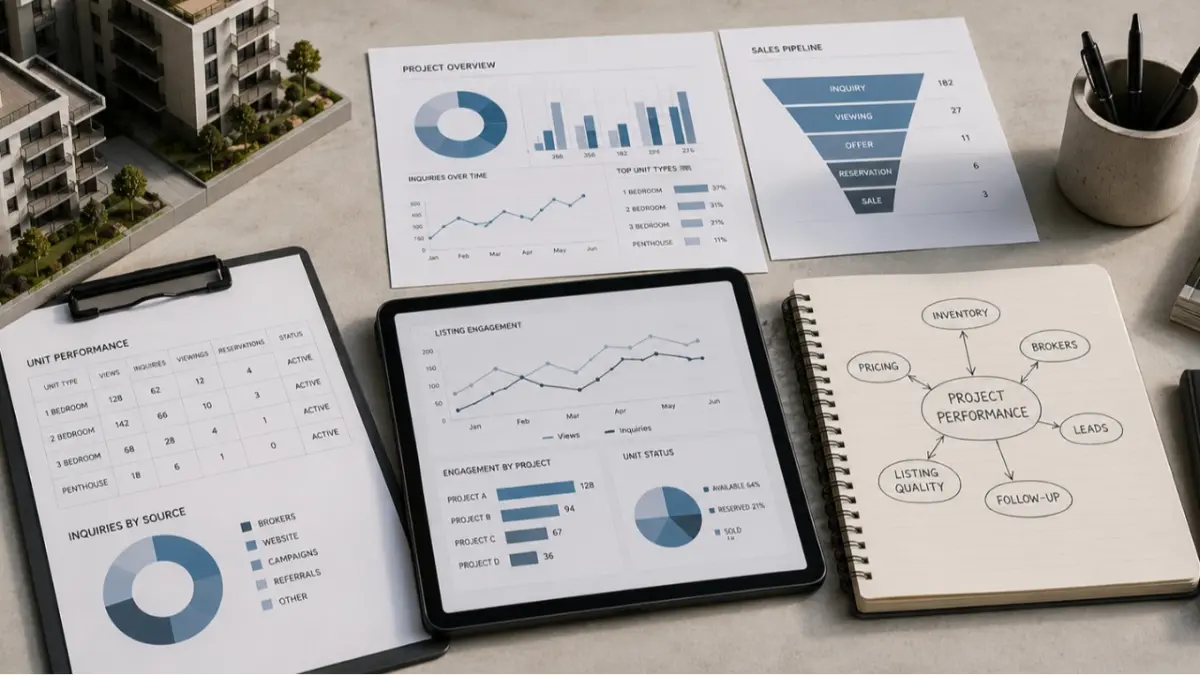
For property developers, project analytics is not about having a polished dashboard for its own sake. It is about understanding what happens after a project goes live: which listings attract attention, where inquiries come from, which units stay inactive, how brokers engage with inventory, and where follow-up slows down between the sales team, CRM and external agencies. Developer project analytics Cyprus helps connect inventory, broker activity, lead stages and listing quality into one commercial view.
Developer project analytics Cyprus for commercial visibility
Project teams often have data, but it is scattered across spreadsheets, CRM notes, email updates and broker conversations. In that format, it is difficult to see why one project gets inquiries but few viewings, why another sits with little movement, or which listings need better photos, floor plans, descriptions or availability updates.
Analytics should help the team identify action points, not just collect numbers. If a project receives views but few inquiries, the issue may be presentation, unclear details or price positioning. If inquiries arrive but viewings are not booked, the team may need to review lead quality, broker response, follow-up ownership and the completeness of the listing record.
Signals developers should monitor after launch
After a project is published, total interest is not enough. A high number of leads may look positive, but without segmentation the team cannot see which unit type works, which broker channel brings serious inquiries or where buyers stop moving forward. A dashboard should help sales, marketing and management discuss specific signals instead of relying on impressions.
Useful review signals can include:
- project views or listing engagement, where available;
- inquiries by project, unit type or source;
- broker activity and repeated questions;
- viewing requests and follow-up status;
- active, reserved, sold or unavailable stock;
- slow-moving units and ignored layouts;
- time since the last listing update;
- document, media and floor plan completeness;
- campaign source and CRM ownership;
- inquiry-to-viewing movement, where tracking is available.
Sales reporting that leads to decisions
People Also Search around this topic shows demand for sales report examples, Excel formats, PDF samples, and daily, monthly or annual report structures. For a developer workflow, that context is useful because teams do not need abstract charts. They need sales reports that show performance by project, location, unit type, availability, broker channel and follow-up status.
A report is valuable only when it leads to a decision. Marketing can see which listings attract attention, the sales team can identify units that are not moving toward viewings, and management can decide what needs review: price positioning, media quality, broker communication or the availability update process. A report that sits in Excel and becomes outdated before the next meeting does not support project management.
Conversion stages inside the MLS workflow
Conversion tracking MLS should be explained carefully. It is not a promise of automatic sales growth. It is a way to understand how an inquiry moves through stages such as inquiry, viewing, offer, reservation and sale. In property development, that journey is rarely short or linear. A lead may ask for details, compare alternatives, return later for a viewing, discuss payment terms and only then move toward a serious decision.
The commercial value is in seeing where momentum is lost. If inquiries do not become viewings, the team should review response time, listing clarity and lead qualification. If viewings do not become offers, the issue may involve price expectations, unit presentation, competing inventory or buyer fit. CRM integration can make this workflow stronger when ownership, notes and next steps are recorded properly.
Listing optimization from dashboard signals
Analytics becomes useful when the team acts on what it sees. If brokers keep asking the same questions, the listing record may not be clear enough. If a listing gets engagement but weak inquiry activity, the team should review the main images, headline, floor plan visibility, description, availability and price context before assuming demand is weak.
A practical optimization flow can include:
- reviewing listings with views but weak inquiry activity;
- updating missing media, floor plans or documents;
- clarifying descriptions, location context and unit availability;
- checking whether repeated broker questions reveal data gaps;
- comparing slow-moving units by layout, stage and presentation;
- connecting CRM notes with listing improvements;
- assigning one owner for the next update;
- setting the next dashboard review date.
Cyprus developer scenarios
A Limassol developer managing several apartment projects may need one view of inventory movement, broker interest and listings that require updates. A Paphos developer working with investor-focused stock may track inquiry quality by project type without relying on unsupported market claims. A Larnaca team reviewing an availability update may need to identify which units became slow-moving after a phase change.
A Nicosia developer coordinating internal sales and external agencies may compare broker activity with CRM follow-up to see whether leads are handled consistently. If data needs to move into another system, Developer API Integration becomes relevant. If inquiries need clearer ownership and stage tracking, Developer CRM Integration should be reviewed. If management needs regular reporting, Developer Dashboard is the natural internal link before routing readers to the RealtyHub MLS platform page.
Project analytics as the next commercial step
The practical value of developer project analytics Cyprus is visibility. Developers can see where inventory stands, how listings perform, how brokers engage, where follow-up slows down and which records need improvement. Analytics does not replace sales management, finance review or commercial strategy. It gives the team a cleaner operating view so decisions are based on current project signals rather than scattered spreadsheets.
RealtyHub MLS should be positioned as the next step for developers who need dashboard-based project visibility, structured inventory, CRM-linked follow-up and reporting workflows. Exact dashboard metrics, real-time updates, automatic tracking or AI recommendations should only be claimed if confirmed by the product. The safe commercial message is simple: analytics helps the team monitor performance, identify weak points and act faster with better context.
Q&A
What is developer project analytics in Cyprus real estate?
It is a workflow for monitoring project inventory, listing engagement, broker activity, inquiries and follow-up stages so developers can make better commercial decisions after launch.
What should a developer dashboard show?
A useful dashboard may show project activity, unit availability, inquiries, broker engagement, slow-moving inventory, CRM status and listing completeness. Exact metrics depend on the platform setup.
Why are spreadsheet reports not enough for project performance?
Spreadsheet reports can become outdated quickly and often sit apart from CRM notes, broker feedback and current inventory. A dashboard can support a more current operating view if the data is maintained properly.
How can analytics help optimize listings?
It can show where listings get attention but weak inquiry activity, where brokers ask repeated questions or where media and documents are incomplete. That gives the team a clear reason to improve the listing before changing strategy.
Can project analytics track conversion from inquiry to viewing?
It can support this workflow if lead stages and CRM follow-up are recorded. The article should not claim automatic tracking unless the platform confirms it directly.
How do reports help sales and marketing teams align?
Reports can show which projects attract attention, which units need support and where follow-up slows down. This helps sales, marketing and management discuss the same data instead of separate opinions.
Does analytics guarantee better sales performance?
No. It supports better visibility and decision-making, but it does not guarantee sales, conversion growth, faster transactions or ROI.
Which claims should be avoided?
Avoid exact dashboard metrics, real-time reporting, automatic conversion tracking, guaranteed conversion improvement, AI recommendations, exact Cyprus rates or claims that RealtyHub replaces commercial strategy unless confirmed.
Author
This material was written by Maria Vashchenko.
For questions, collaboration, or further discussion, feel free to contact me on LinkedIn.