Developer Pricing Tools Cyprus
Learn how Cyprus developers can use MLS analytics, comparative inventory, broker feedback and dashboard data to support smarter project pricing.
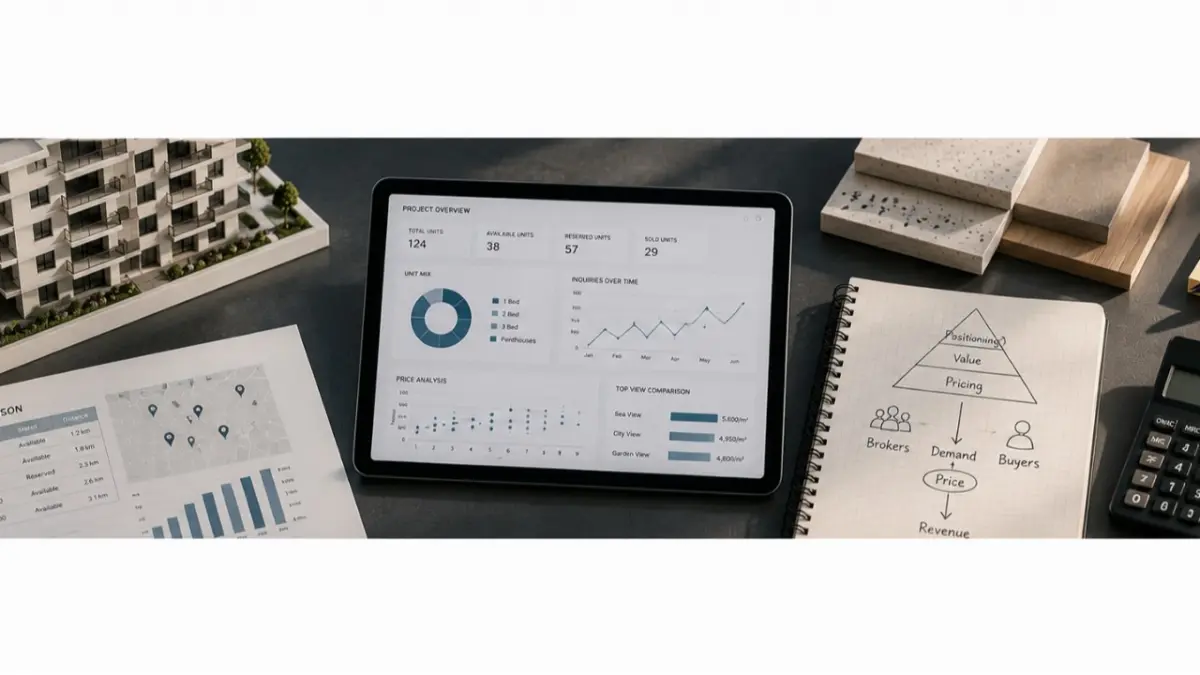
Pricing new-build inventory is a commercial decision, not only a finance calculation. Developer pricing tools Cyprus help project teams compare active inventory, unit types, location, delivery stage, broker feedback and inquiry activity before setting or adjusting prices. For developers, the goal is not to find an automatic “correct price”, but to make pricing decisions with better comparative visibility and fewer unsupported assumptions.
Developer pricing tools Cyprus for project positioning
A pricing decision affects how brokers present the project, how buyers compare it with alternatives and how quickly the sales team understands which units need attention. If pricing is based only on internal cost plus margin, the project may miss what is happening around it: competing new-build stock, resale alternatives, buyer objections, remaining availability and differences between unit types.
This is where Google’s related searches around pricing pyramid, asking price and pricing psychology are useful context. Even in consumer-facing property sales, price is not just a number. It shapes perception, urgency and trust. For developers, that means pricing should be reviewed as part of project positioning, disclosure readiness, listing presentation and broker communication, not as a one-time spreadsheet decision.
Building a pricing model with market context
A real estate pricing model should combine commercial inputs, not replace judgment. Useful inputs can include comparable active listings, project location, floor level, view, unit layout, amenities, delivery stage, payment structure, remaining stock, broker feedback and inquiry quality. A ground-floor unit, a sea-view apartment and a top-floor corner unit may need different logic even inside the same development.
A strong model helps the team avoid flat pricing moves that do not reflect unit-level differences. A blanket increase or reduction across all units can distort positioning if some inventory is already competitive while other units are slow because of layout, view, timing or presentation. The model should support review meetings between sales, marketing and finance, not act as an automatic pricing engine.
MLS analytics as decision support
MLS analytics can help developers see how project inventory sits against active alternatives. The value is comparative visibility: which listings are available, how similar stock is positioned, which units receive attention, where brokers raise objections and what inventory may be overexposed or unclear. This can make pricing conversations more evidence-based than a manual spreadsheet or old PDF.
For RealtyHub MLS, the safe framing is decision support. Analytics can support pricing review, dashboard discussions, broker coordination and CRM feedback loops, but it should not be presented as certified valuation, automatic price optimization or guaranteed accuracy. Final pricing still belongs to the developer’s commercial team, with professional valuation or finance review where needed.
New-build pricing in Cyprus needs caution
New build valuation Cyprus should not be treated the same as resale comparison. A new-build unit may be affected by delivery stage, developer reputation, payment terms, specification, view, floor, remaining stock and how the project is positioned against nearby alternatives. Off-plan inventory also requires careful communication because some factors may still depend on future delivery or project updates.
The safest approach is to separate three things: pricing support, formal valuation and internal commercial approval. MLS data can help the team compare active inventory and buyer response, but it does not replace a certified valuer, legal review, sales strategy or financial model. This distinction protects the article from overclaiming and helps developers understand how to use pricing tools responsibly.
Practical pricing review framework
Before changing prices or launching a new phase, a developer team should organize the review around current inventory, comparable stock and feedback from the sales channel. This turns pricing into a repeatable process instead of a reactive decision after slow inquiries or broker complaints.
- Inventory readiness: confirm unit types, layouts, delivery stage, media, documents and availability.
- Comparable market view: review active competing inventory and relevant resale alternatives.
- Unit-level logic: compare floor, view, size, layout and project position instead of treating all units equally.
- Broker and buyer feedback: collect objections, inquiry quality and reasons why units are not converting.
- Dashboard review: use reporting to identify slow-moving or overexposed inventory.
- CRM and lead activity: connect pricing review with actual inquiries, follow-up notes and buyer segments.
- Internal approval: agree who can approve pricing updates and how changes are communicated.
- Next review date: schedule the next pricing check after release, campaign activity or availability changes.
Cyprus developer workflow examples
A Limassol developer comparing coastal apartments may need to see whether units are positioned above, below or in line with nearby active stock. A Paphos developer with investor-focused inventory may review pricing through remaining availability, rental-oriented buyer interest and broker feedback, without inventing yield claims. A Larnaca team launching a new phase may compare what sold, what remains and whether the next release needs different positioning.
A Nicosia developer with family-oriented units may compare layout, size, parking, delivery stage and location instead of using one general project price logic. If the team also needs CRM signals, dashboard reporting or live inventory movement into another system, this is where internal links to Developer CRM Integration, Developer Dashboard and Developer API Integration become commercially relevant before routing the reader to the RealtyHub MLS platform page.
Q&A
What are developer pricing tools in Cyprus real estate?
They are decision-support workflows and data tools that help developers compare inventory, active alternatives, broker feedback and lead activity before setting or adjusting project prices.
Do pricing tools replace professional valuation?
No. They can support commercial pricing review, but they should not be described as official valuation, certified appraisal or automatic price recommendation.
How can MLS analytics help with pricing?
MLS analytics can show comparative inventory, remaining availability, listing activity, broker feedback and dashboard signals. This helps the team review project positioning with more current information.
Why should developers avoid pricing only from cost plus margin?
Cost matters, but it does not show how buyers compare the project with active alternatives. Pricing also needs market context, unit-level differences, broker response and sales activity.
How often should pricing be reviewed?
Pricing should be reviewed when availability changes, a new phase launches, broker feedback repeats, campaign results shift or certain units stop getting serious interest.
What do related searches like pricing pyramid and asking price show?
They show that pricing is strongly connected to perception, buyer confidence and market positioning. For developers, that means price should support the way the project is presented and understood.
Can MLS data recommend exact prices automatically?
Only if the platform explicitly confirms that feature, and even then the result should be reviewed carefully. Without confirmation, it is safer to describe MLS data as pricing support, not price prediction.
What should not be claimed in this article?
Avoid claims about certified valuations, exact price recommendations, guaranteed accuracy, guaranteed sales speed, automatic optimization, AI price prediction or Cyprus price benchmarks unless verified directly.
Author
This material was written by Maria Vashchenko.
For questions, collaboration, or further discussion, feel free to contact me on LinkedIn.