New Development Portal Cyprus — How to Publish a Project Once Instead of Five Times
Stop outdated PDFs and conflicting unit prices. See how one connected portal keeps every broker working with the latest project data across Cyprus.
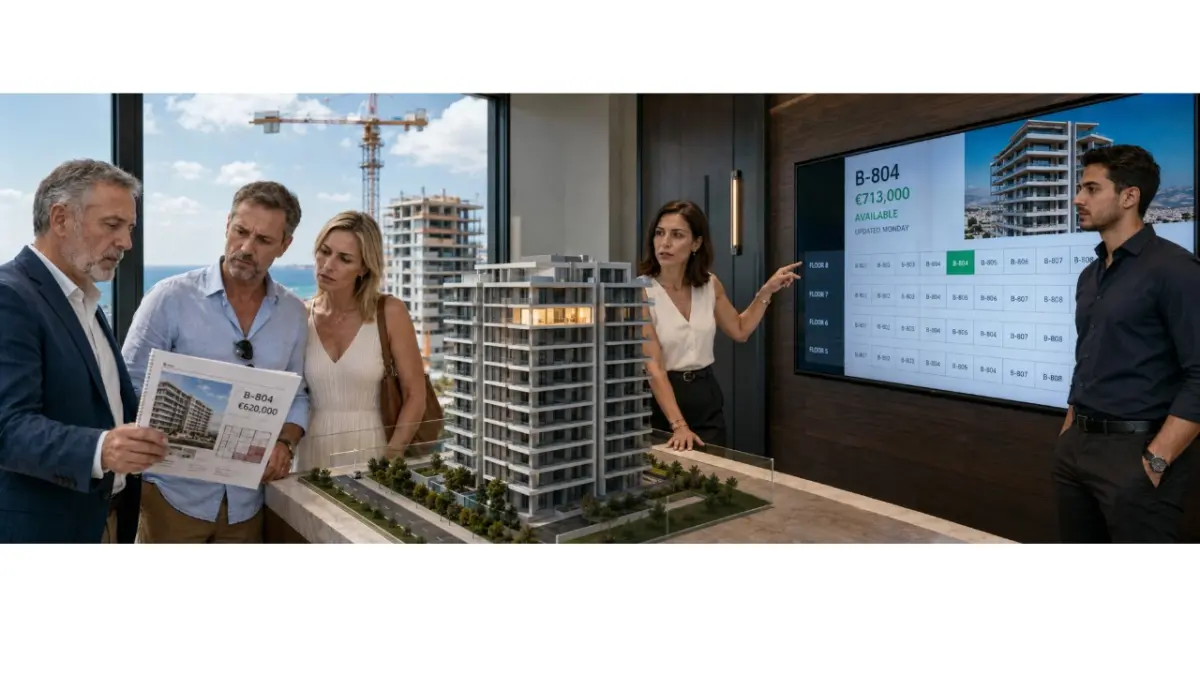
A developer is selling a 40-unit project through three channels: the project website, a PDF brochure shared with partner agencies, and a profile on a property portal. On Monday, the sales team increases prices for the upper floors following a strong week of sales. The website is updated that day, but the PDF in the hands of partner agents remains unchanged for another three weeks. One agent then quotes the old price to a buyer, leaving the developer with two poor options: honour the outdated price and lose margin, or explain why the price has “suddenly” increased.
A new development portal Cyprus solution is intended to prevent exactly this situation. The developer publishes the project once and retains control over the prices, availability and project information seen by every authorised partner.
What Developers Actually Need to Centralise
A property developer portal addresses a specific operational problem: project data is often spread across a website, broker PDFs, agency emails and multiple property directories. Every update must be entered manually in several places, making outdated prices, inconsistent unit availability and delays across the partner network almost inevitable.
The required workflow is straightforward. A unit’s status changes once in a central system, and that update is distributed automatically to connected partners and channels. There is no need to edit multiple files, replace brochures or send another round of emails.
The Cyprus New-Build Market Context
New developments in Cyprus are frequently marketed before construction is complete, making presale and pre-launch periods important to the project’s overall sales performance. Buyers may evaluate more than the individual unit. They often need clear information about eligibility for reduced VAT, residency-related criteria, payment plans and location.
Multilingual presentation is also a practical requirement. English provides the main international layer, Greek supports the local market, and Russian remains relevant for parts of the international and expatriate audience. Updating separate language versions manually across every channel multiplies the same fragmentation already affecting prices and availability.
Project Website, MLS for New Builds Cyprus, or a Hybrid Model
Each publishing model offers a different balance of control, reach and operational efficiency.
A project website gives the developer full control over branding, positioning and the project story. An MLS for new builds Cyprus provides structured project data, access for partner agencies and faster distribution of updates. In many cases, a hybrid model works best: the website remains the branded presentation layer, while the MLS becomes the operational distribution layer for agencies and agents.
Each option also carries a different risk:
- Project website only: Partner reach may remain limited because agents do not have direct, structured access to current project data.
- Multiple external portals without a central source: Prices and unit statuses can quickly diverge between platforms.
- A hybrid model without clearly defined roles: Teams may not know whether the website or the portal is the authoritative source when both are updated independently.
How to Choose the Right Publishing Model
The right setup depends on several practical characteristics of the project:
- Number of units: A development with 10–15 units may be manageable through a website and targeted distribution, while a larger multi-phase project benefits more from centralised control.
- Number of partner agencies: The more brokers selling the project simultaneously, the greater the risk of inconsistent information.
- Sales velocity: In a fast-moving project, even a short delay in updating a unit’s status can create expensive conflicts.
- International demand: When a large share of buyers comes from abroad, structured multilingual presentation becomes more efficient than maintaining separate versions manually.
The goal is not simply to add another publishing channel. It is to establish one authoritative source for project information and define how every other channel receives its data.
What a Centralised New Development Portal Should Include
A practical way to assess any portal is to check whether it supports four core functions:
- Unit availability matrix: The current status of every unit, organised by building, floor and phase.
- Floor plans and pricing tiers: Plans and prices linked to individual units rather than shown only at project level.
- Multilingual presentation: Project information available in at least English, Greek and Russian without duplicating the entire update process.
- Controlled agent access: Partners can view and use current information without being able to change official prices or unit statuses.
When all four functions are connected, the development can be distributed as one structured digital product rather than a collection of separate, gradually outdated listings.
How MLS RealtyHub Supports This Workflow
MLS RealtyHub follows the same centralised model. The developer adds a project and updates a unit once, while the latest information becomes available to authorised partners and connected distribution channels. The portal acts as the operational link between the internal sales team and external agencies rather than functioning as another standalone project website.
For developers connecting the platform to their existing systems, Developer API Integration can support automated data exchange, while Developer CRM Integration connects project distribution with the sales workflow. A central Developer Dashboard provides visibility across projects, units and partner activity.
The result is a new development portal Cyprus workflow built around a single source of truth: publish once, update once and give every authorised partner access to the current version.
Frequently Asked Questions
What Is a Property Developer Portal?
It is a centralised system where a developer publishes a project once and manages prices, unit availability, floor plans and partner access from one place. Current information can then be distributed to authorised agencies and connected platforms without repeated manual updates.
How Do Developers Publish New-Build Projects in Cyprus?
Developers commonly use several channels at the same time, including project websites, property portals, PDF brochures and agency mailing lists. Without a central data source, this setup can lead to conflicting prices and unit availability.
Which MLS Is Best for New Developments?
The right MLS should provide a live unit availability matrix, floor plans linked to individual units, multilingual project presentation and controlled access for partner agencies. It should also make clear who can view, distribute and edit project information.
How Should Off-Plan Listings Be Managed?
Off-plan listings should be managed through a single project database. When a unit’s price or status changes, the update should become visible to every authorised partner immediately, reducing the risk of the same unit being offered to different buyers on conflicting terms.
Can Prices Be Updated Across Several Portals at Once?
Yes, provided the portals receive their data from a centralised system or integration. The developer updates the price once, and the change is then distributed to connected channels without entering it again manually.
How Is a Developer Portal Different from a Project Website?
A project website primarily supports branding, positioning and presentation. A developer portal supports operations: structured unit data, price and availability synchronisation, partner distribution and access control.
Author
This material was written by Maria Vashchenko.
For questions, collaboration, or further discussion, feel free to contact me on LinkedIn.