Real Estate Listing Photos in Cyprus: How Agents Can Prepare Properties for MLS
Learn how real estate photography Cyprus, best listing photos, and image guidelines MLS help agents create clearer, more trusted property listings.
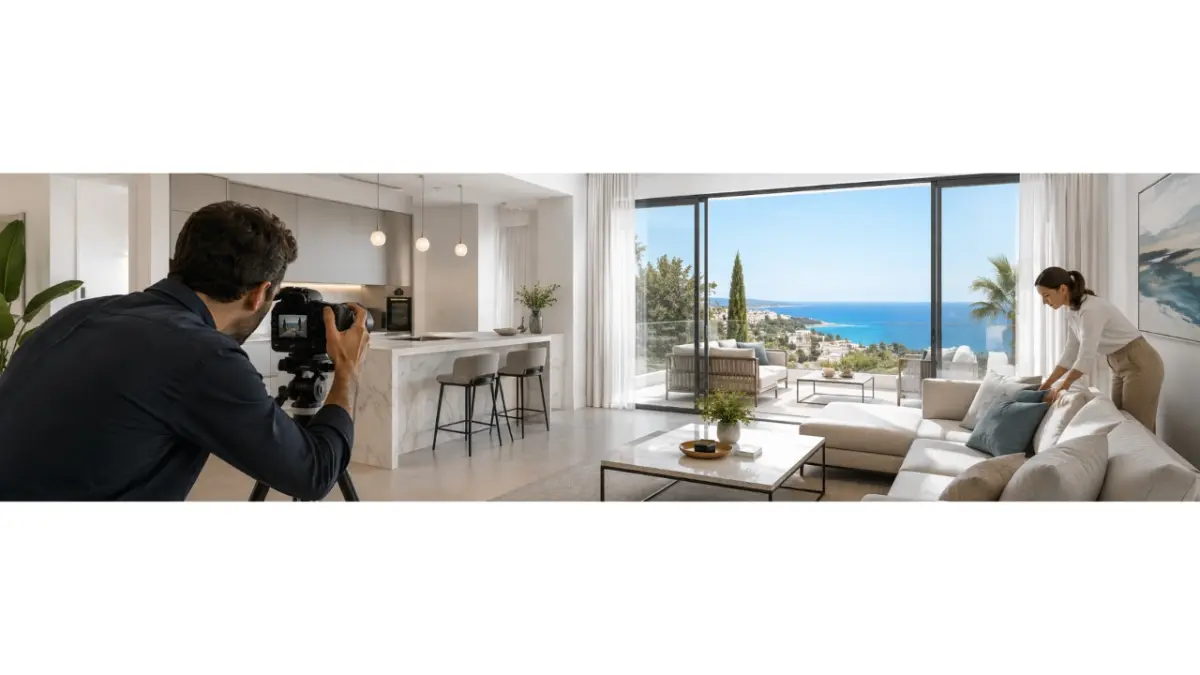
Listing photos often shape a client’s first decision before they ever speak to an agent. If a property looks dark, distorted, incomplete, or poorly prepared, the listing can lose trust even when the price and location are strong. For real estate teams, real estate photography cyprus is not about making a property look artificially perfect. It is about showing the home clearly, honestly, and professionally so a buyer can understand the condition, layout, light, view, and key spaces before deciding whether to book a viewing.
Why photo quality affects trust
Clients usually judge the visual quality of a listing before they read the full description. Good photos help them understand room size, natural light, finishes, window views, outdoor areas, and the general feel of the property. When the images are clear, current, and not heavily edited, the listing feels more reliable.
For agents, a strong photo set also reduces unnecessary back-and-forth. Clear images answer many of the questions that would otherwise appear in messages: what the kitchen looks like, how bright the living room is, whether the balcony is usable, what the bathroom condition is, and how the building or complex is presented. Inside an MLS, this matters because the property card should work as a reliable source of information, not just a marketing preview.
What a strong photo set should show
A listing should help the client move through the property visually. The first images usually need to establish the property type, exterior, main living space, and overall impression. After that, the sequence should cover the main rooms, bedrooms, bathrooms, kitchen, balcony or terrace, view, parking, entrance, and any relevant amenities.
For apartments, the photos should make the layout and proportions easy to understand. For villas, the connection between the house, outdoor area, pool, terrace, and view is often essential. For new developments, the set should show not only attractive lifestyle spaces, but also practical details such as the entrance, façade, shared areas, parking, balcony, and the view from the actual unit where possible.
A useful listing set usually includes:
- exterior or building context;
- main living areas and bedrooms;
- bathrooms, kitchen, balcony, or terrace;
- view, parking, entrance, and important shared areas.
The goal is not to upload as many images as possible. The best listing photos are the ones that help the client understand the property without repeating the same angle or hiding important spaces.
What damages a property presentation
Most listing photo problems come from weak preparation rather than poor equipment. Dark rooms, clutter, closed curtains, tilted vertical lines, random reflections, and messy surfaces can make a good property look smaller, older, or less cared for than it really is.
Heavy editing creates another problem. If colours look unnatural, windows appear too blue, rooms look much larger than they are, or weak areas are completely hidden, the viewing can disappoint the client. That does not help the sale. MLS photos should improve presentation without misleading the buyer. The property should look its best, but still feel accurate when the client visits in person.
How to prepare before the shoot
Preparation should happen before the camera comes out. The property needs to be clean, surfaces should be cleared, curtains should be opened, lights should be checked, and personal items should be removed where possible. The space should feel ready for viewing, but not staged so heavily that it feels artificial.
The agent should also plan the order of the shoot. It helps to know which rooms need daylight, which views should be captured first, which details matter for the property type, and which photo should become the first image in the listing. For high-value homes, complex interiors, or properties where atmosphere and view are major selling points, a professional photographer is usually worth it. For simpler listings, a careful agent-made photo set can still work if the light, framing, and order are strong.
When drone photography adds value
In Cyprus, drone photos can be useful when the setting is part of the property’s value. Villas, sea-view homes, hillside properties, land plots, and larger developments often need more than interior shots. The client may want to understand distance to the sea, plot shape, access roads, neighbouring buildings, privacy, or the scale of the project.
Drone images should support the listing, not replace the core photo set. They are useful when they explain location, view, land, or development context. If they are added only for visual effect, they can distract from the actual property. For many listings, a few well-planned aerial shots are enough.
Why MLS photo standards matter
A real estate team needs consistent photo rules so listings do not require constant corrections before publication. In the middle of the publishing process, image guidelines mls help define what can be uploaded, what should be rejected, how photos should be ordered, and what level of editing is acceptable.
These standards are not only about visual style. They help the team review listings faster, reduce errors, and keep the MLS trustworthy. If one property card has a full set of clear, current images and another has five dark photos with watermarks or old dates, the platform stops feeling like a consistent professional database. Good standards make the publishing process easier for agents and clearer for clients.
Before publication, the team should check that the photos are current, belong to the correct property, are not heavily filtered, do not include unnecessary screenshots or watermarks, follow a logical order, and are clear enough for both desktop and mobile viewing.
A practical before-and-after example
A simple before-and-after comparison can explain the value of better listing photos quickly. In the first version, the living room is photographed in the evening, with closed curtains, clutter on the table, a tilted camera angle, and dark corners. The space looks smaller and less maintained than it really is.
In the second version, the room is prepared properly. Surfaces are cleared, curtains are open, the light is balanced, the camera is level, and the photo shows the connection between the living area, kitchen, and balcony. The property has not been changed, but it has become easier to understand. That is the purpose of good MLS photography: not to create an illusion, but to help the client make a faster and more confident decision about a viewing.
FAQ
Why do agents need professional property photos?
Professional photos help present a property clearly, consistently, and without accidental distortion. They are especially valuable for high-end homes, villas, complex layouts, sea-view properties, and listings where visual trust strongly affects viewing requests.
Can agents take good listing photos themselves?
Yes, for simpler properties. The agent needs good natural light, clean framing, straight vertical lines, and a complete shot list. The photos should show the property clearly rather than rely on filters or dramatic angles.
How many photos should a property listing include?
The number depends on the property, but the set should cover every key area. A client needs to see the main rooms, kitchen, bathrooms, balcony or terrace, view, entrance, and relevant building or outdoor features.
Why is heavy editing a problem?
Heavy editing can create false expectations. If the property looks much brighter, larger, newer, or cleaner than it really is, the client may lose trust during the viewing. MLS photos should improve clarity, not misrepresent the property.
When should drone photos be used?
Drone photos are useful when location, view, land, access, privacy, or project scale affects the property’s value. They work well for villas, sea-view homes, land plots, hillside properties, and larger developments in Cyprus.
Author
This material was written by Maria Vashchenko.
For questions, collaboration, or further discussion, feel free to contact me on LinkedIn.