Email Marketing Developers Cyprus — How to Connect Campaigns With Current Project Data
Learn how Cyprus developers can segment buyers and agents, automate follow-up and keep every project email aligned with current prices and availability.
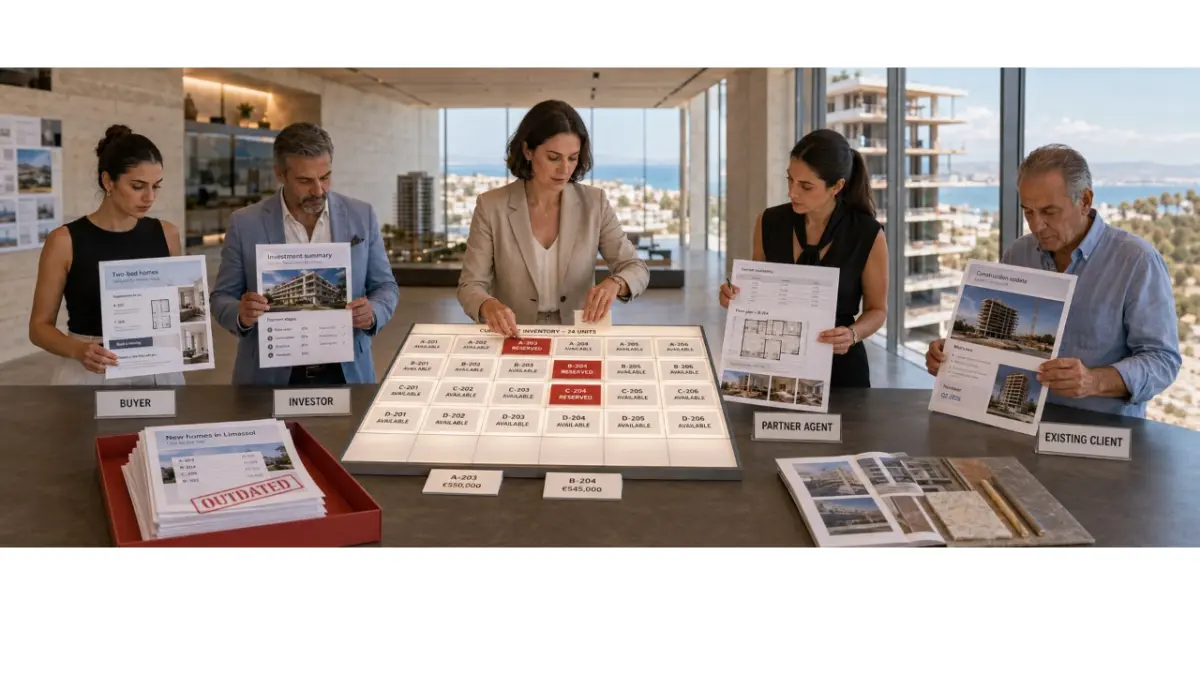
A developer launches a 24-unit project in Limassol and sends one email to the entire contact database. Buyers, investors and partner agents receive the same message, even though they need different information. A week later, several units are reserved and two prices change, but the original email continues circulating with the old details. The campaign was delivered, yet it created more follow-up work instead of supporting sales. Effective email marketing developers cyprus requires more than a mailing list: every message must match the recipient, the sales stage and the current state of the project.
Why Email Campaigns Fail Before the Copy Is Written
The main problem is rarely the wording of the email. It is the data behind it. When prices, availability, floor plans and contact activity are stored in separate spreadsheets, folders and systems, the marketing team cannot reliably determine what should be sent or to whom.
A single generic campaign also ignores the fact that developers communicate with several different audiences. Buyers want suitable units, prices and viewing options. Investors may focus on the project stage, payment structure and investment case. Partner agents need current inventory, floor plans and materials they can confidently present to clients. Existing leads need follow-up connected to their previous enquiry rather than another general announcement.
When all these contacts receive the same message, relevance falls and complaints become more likely. The newsletter developers send to buyers should therefore not be identical to the inventory update prepared for partner agencies.
How Segmentation Changes the Campaign
Useful segmentation begins with the recipient’s role and then becomes more specific. A developer can divide contacts by buyer, investor, agent or existing client, followed by preferred region, budget, property type, language and stage in the sales process.
This allows the same project update to become several focused messages:
- Buyers receive available units within their budget.
- Investors receive information relevant to their stated objectives.
- Partner agents receive inventory, floor plans and approved sales materials.
- Leads who requested a viewing receive a direct follow-up.
- Inactive contacts receive a re-engagement message rather than every project update.
- Existing clients receive relevant construction or handover information.
Cyprus developments may require English, Greek and Russian communication, but language is only one level of segmentation. Translating one generic email into three languages does not make it relevant if the offer still ignores the recipient’s needs.
Campaign frequency should also follow the reason for contacting the person. A genuine price change, new unit or construction milestone can justify an immediate update. A general newsletter may follow a regular schedule. Sending an email simply because another week has passed is not a useful trigger.
Connecting Email, CRM and Project Inventory
Different tools solve different parts of the workflow. A dedicated email platform manages templates, deliverability, campaign scheduling and reporting. A CRM records contacts, lead stages and follow-up activity. An MLS or central project system maintains structured information about projects, units, prices and availability.
Problems begin when these systems operate independently. The CRM may know that a buyer wants a two-bedroom apartment in Limassol but not which units remain available. The email platform may contain a polished project template but pull its price from an old campaign. The project database may be current, yet the sales team still copies its information manually into every message.
A workflow combining CRM emails MLS, MLS data and project triggers should work differently:
- Project prices and availability are maintained in one authoritative system.
- The CRM identifies the recipient, interest and stage of the relationship.
- A relevant project event activates the campaign or follow-up.
- The email uses approved current information.
- Replies, enquiries and viewing requests return to the sales workflow.
A hybrid model is usually the most practical. The CRM manages contacts and follow-up, the MLS maintains current project data, and the email service handles sending and campaign presentation. Manual emails remain useful for VIP contacts, negotiations and highly specific follow-up.
A Campaign for a 24-Unit Limassol Project
Consider a hypothetical developer launching a new off-plan project with 24 units. The contact base is divided into local buyers, international buyers, investors and partner agents. Instead of sending one universal newsletter, the developer builds a short sequence around real project and contact activity.
The workflow could include:
- A launch email adapted to each relevant segment
- A partner-only update with current availability and floor plans
- A follow-up for contacts who requested information
- A price-change message sent only to leads interested in affected units
- A viewing follow-up linked to the recipient’s enquiry
- A re-engagement email after a defined period without a response
The agent email could follow a simple structure:
- Subject: New Limassol project with current unit availability
- Preview text: Floor plans, prices and available units in one update
- Opening: A brief explanation of the project and ideal buyer profile
- Project block: Location, unit types, construction stage and key terms
- Availability block: Current units and prices taken from the approved source
- CTA: View the project details or request a client presentation
- Footer: Sender information, communication preferences and unsubscribe option
If three units are reserved after the launch, the central inventory is updated first. Future messages then use the new availability instead of repeating information from the original email or PDF. The benefit is operational accuracy, not a guaranteed increase in sales.
Consent, Deliverability and Useful Measurement
Email campaigns in Cyprus must comply with the GDPR, applicable ePrivacy rules and local data-protection requirements. The developer should know how each contact entered the database, what communication the person agreed to receive and which lawful basis supports the processing. The system should maintain consent records, unsubscribe options and suppression lists so that opted-out contacts are not added back during a later import.
Purchased databases and old contact lists create particular risk because the developer may be unable to demonstrate a lawful basis or reasonable expectation for the communication. The rules can also differ depending on whether the recipient is an existing customer, an inbound lead, an individual agent or a completely cold contact. These distinctions should be reviewed against official guidance from the European Data Protection Board and the Office of the Commissioner for Personal Data Protection in Cyprus.
Campaign performance should not be judged by open rate alone. Privacy protections and automated image loading have made opens less reliable. Developers should examine delivery and bounce rates, clicks, replies, enquiries, viewing requests and qualified leads. The most useful question is not how many recipients opened the message, but whether the campaign produced relevant actions that moved contacts forward.
When Automation Is Worth Using
Automation becomes valuable when the developer manages several projects, a large contact database or frequent changes in prices and availability. It reduces repetitive work and helps teams react consistently to enquiries, project launches and inventory updates.
A small developer with a limited database may achieve better results through carefully written personal emails. Automation is not automatically superior, especially when the relationship is new, the decision is complex or the recipient expects individual attention. It also cannot correct weak project positioning, poor data or an irrelevant contact base.
MLS RealtyHub can support the data layer behind this workflow. Developer CRM Integration can connect project communication with lead stages and follow-up. Developer API Integration can reduce manual transfer of prices and availability between systems. The Developer Dashboard can give the team a central view of projects and current inventory.
The role of MLS RealtyHub is not to guarantee that an email produces a transaction. It is to help the developer work from structured, current project information so that buyers and partners do not receive conflicting versions of the same offer. That is the operational value behind email marketing developers cyprus: the right message reaches the right contact without separating the campaign from the project’s actual status.
Frequently Asked Questions
How Do Developers Use Email Marketing?
Developers use email for project launches, availability updates, price changes, construction milestones, viewing follow-up, partner communication and lead re-engagement. Each campaign should correspond to a specific audience and stage in the sales process.
What Should a Real Estate Newsletter Include?
It should include a clear subject, short preview, relevant project information, current prices or availability where appropriate, one primary CTA, sender details and an unsubscribe option.
How Often Should Developers Send Newsletters?
There is no universal frequency. Project changes and recipient behaviour should determine most communication. General newsletters can follow a regular schedule, while important availability or price updates may need to be sent immediately to relevant segments.
What Is CRM Email Marketing for Real Estate?
CRM email marketing uses contact data and sales stages to determine which messages should be sent. It can trigger follow-up after an enquiry, viewing or period without a response.
How Should Property Email Campaigns Be Segmented?
Useful criteria include the recipient’s role, budget, preferred region, property type, language and stage in the sales process. Developers should separate buyers, investors, agents and existing clients.
How Do an MLS and CRM Work Together?
The MLS supplies structured project and inventory information, while the CRM manages contacts, lead stages and follow-up. Connecting them reduces the need to copy project details into emails manually.
How Can Developers Avoid Sending Outdated Project Information?
Prices and availability should come from one approved source. Campaign templates, CRM records and sales materials should not maintain independent versions of live inventory.
Which Metrics Matter Most?
Delivery, bounce rate, clicks, replies, enquiries, booked viewings and qualified leads provide more useful evidence than open rate alone.
Author
This material was written by Maria Vashchenko.
For questions, collaboration, or further discussion, feel free to contact me on LinkedIn.